20 — From Celebration to Service: How the Iwude Ijesa Unity Carnival Is Mobilising Societies for Community Development
Culture has the power to unite people, preserve collective identity and strengthen the bonds between generations. When that shared identity is channelled into practical action, cultural gatherings can also become platforms for education, community service and sustainable development.
This principle is reflected in the evolution of Iwude Ijesa, the annual celebration that brings together Ijesa sons and daughters at home and in the diaspora. Through the introduction of the Ijesa Unity Carnival, the celebration has been expanded beyond its traditional cultural activities to encourage participating societies and associations to contribute more directly to the development of their communities.
The initiative forms the twentieth milestone in the decade-long stewardship of Asiwaju Olayinka Fasuyi, the First Asiwaju of Ijesaland. It illustrates how cultural mobilisation can be connected to practical community development when leadership, organised societies and shared responsibility work together.
Reimagining Iwude Ijesa: From One Day to Two
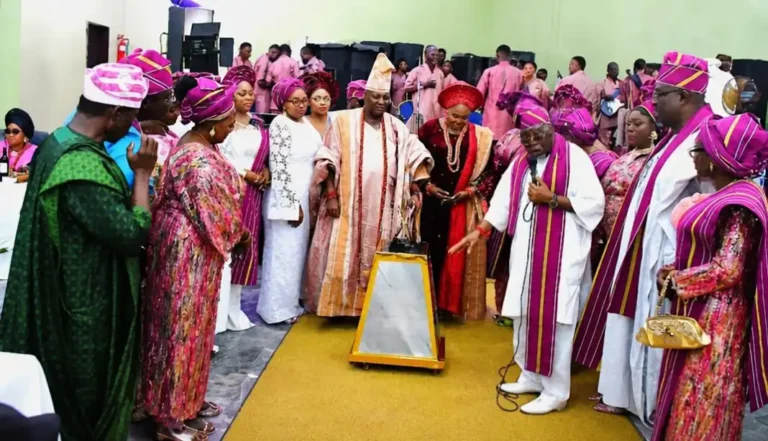
The decision to expand Iwude Ijesa into a two-day celebration emerged from a meeting of the Iwude Ijesa Planning Committee with Ijesa sons and daughters at home and abroad on 26 July 2024.
The meeting considered how the annual celebration could serve a broader purpose by strengthening unity and encouraging more active participation in the development of Ijesaland.
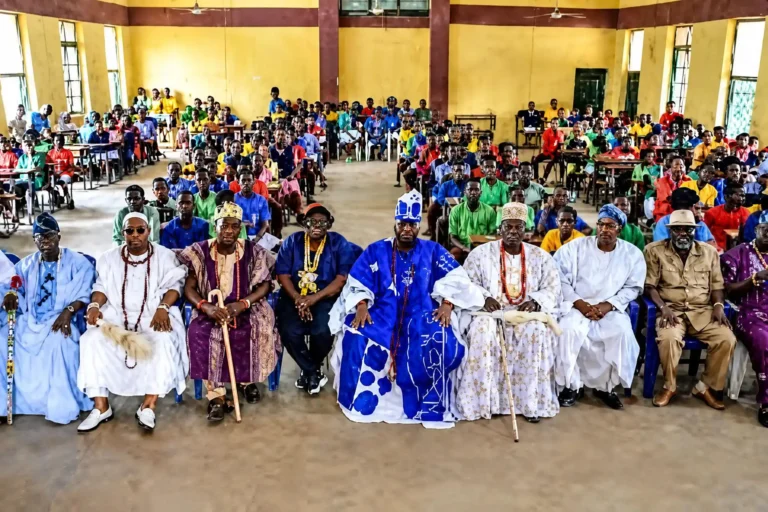
Two proposals were subsequently presented to the late Owa Obokun Adimula of Ijesaland, His Royal Majesty, Oba Dr Gabriel Adekunle Aromolaran II, on 30 July 2024. They proposed introducing a Sunday grand reception following the traditional Saturday festival and relocating the reception from Obokungbusi Civic Centre to the Mini Sports Arena of Ilesa Grammar School.
The late monarch approved the proposals, paving the way for the expanded format and the introduction of the Ijesa Unity Carnival.
The planning and coordination of this change were led by the Iwude Ijesa Planning Committee under Chief Afolabi Igbaroola as chairman and Alagba Wale Idowu as vice-chairman.
Their work created a wider platform for Ijesa societies, clubs and associations to celebrate their shared heritage while considering how their collective strength could support community needs.
The Maiden Ijesa Unity Carnival
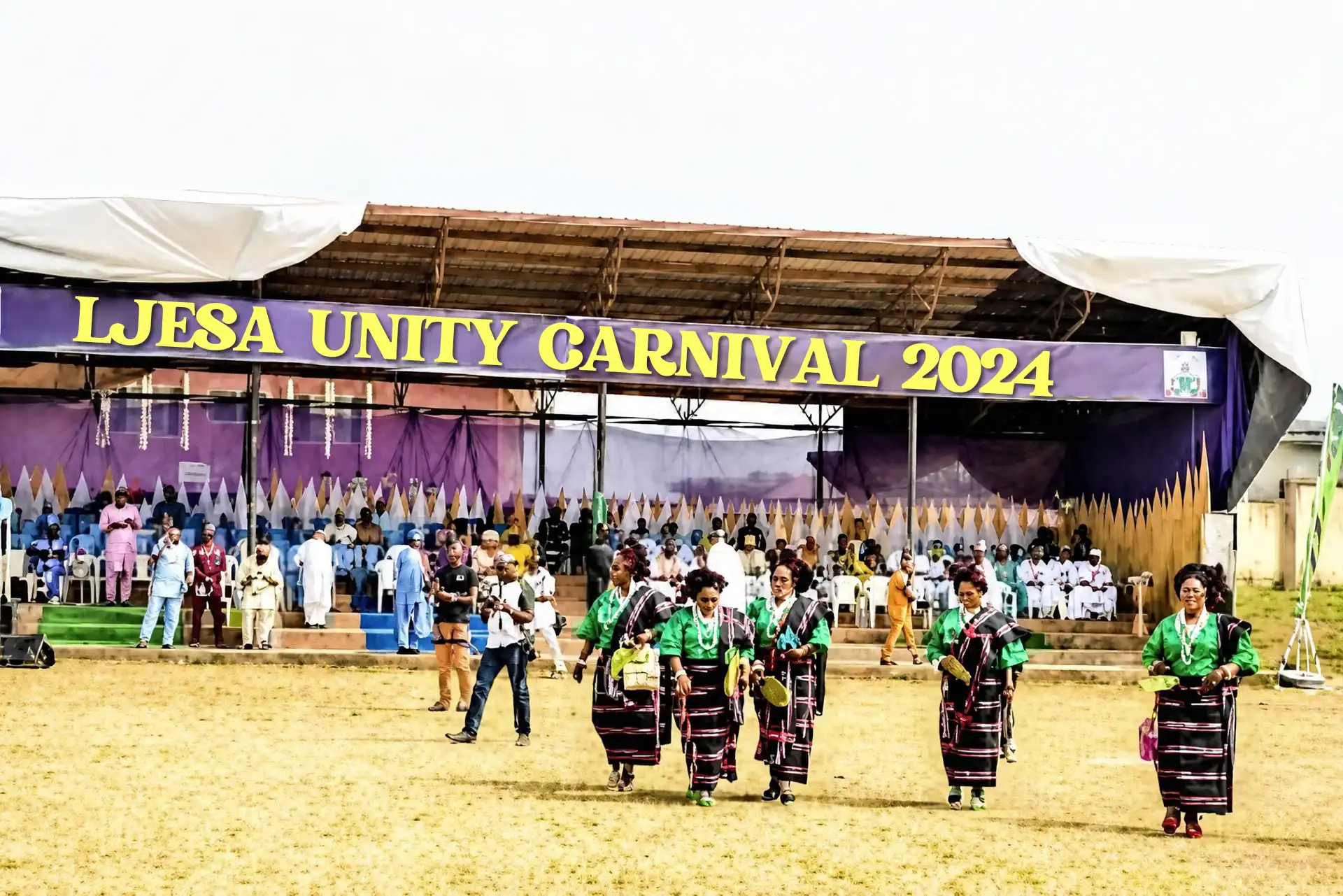
The maiden Ijesa Unity Carnival took place on 22 December 2024, following the traditional Iwude Ijesa celebration.
As chairman of the maiden carnival, Asiwaju Fasuyi used the occasion to advance a development-focused message. He challenged participating societies, popularly known as Elegbejegbes, to look beyond annual reunions, cultural displays and colourful uniforms and translate their collective resources into tangible projects that would benefit the people.
The appeal placed community service alongside cultural celebration as an important expression of Ijesa identity.
Societies bring together people with different professional backgrounds, financial capacities, experiences and networks. When organised around a common purpose, those resources can help address needs that might otherwise remain unmet.
Fasuyi also encouraged the societies to participate in the Ijesa Development Fund (IDF), a community financing initiative designed to support development across Ijesaland’s six local government areas and 64 wards.
The broader message was that unity should be demonstrated not only through attendance at festivals but also through meaningful contributions to education, healthcare, infrastructure and other locally identified priorities.
Turning a Cultural Platform into a Development Opportunity
The expanded Iwude Ijesa format provides a meeting point for cultural identity and community responsibility.
By encouraging registered societies to undertake community-focused projects, the planning committee established a framework through which participation in the carnival could extend beyond the celebration itself.
The expectation is that each society will consider what it can contribute within its capacity. One association may support students with educational materials; another may assist a healthcare facility, improve a local school or contribute to water provision and other community needs.
This approach recognises that community development does not always depend on a single large intervention. A series of smaller, well-targeted projects can also make a meaningful difference when they respond to genuine needs and are delivered responsibly.
It also gives societies an opportunity to demonstrate their commitment through identifiable contributions rather than relying solely on statements of goodwill.
The experience of Egbe Yeye Gbobaluyi Adimula Ijesaland offers a practical example of this principle in action.
Egbe Yeye Gbobaluyi Adimula: Education as Community Service
One of the notable examples highlighted in the published account is the educational support provided by Egbe Yeye Gbobaluyi Adimula Ijesaland, a registered society under the Iwude Ijesa Planning Committee.
Under the leadership of its Iya Egbe, Yeyemeso Kemi Gbangbalasa, the society organised educational interventions that directed its collective resources towards the needs of students.
In marking the seventieth birthday of its patron, Asiwaju Fasuyi, the society presented 300 customised school bags and 500 notebooks and pens to students in selected schools in Ilesa.
The gesture served as both a tribute to its patron and a practical contribution to education. By providing learning materials, the society sought to support students and ease some of the everyday requirements associated with schooling.
The intervention demonstrated how a celebratory occasion could be used to draw attention to the needs of young people and mobilise assistance for them.
Importantly, the contribution was an initiative of the society. Its significance lies in the decision by its members and leadership to direct their collective resources towards an identified community need.
Extending Support to Owa Agunlejika High School
The society subsequently extended its educational intervention to Owa Agunlejika High School in Muroko, Ilesa.
On 5 May 2026, it donated 130 school uniforms to students at the school. The intervention was undertaken in line with the Iwude Ijesa Planning Committee’s directive encouraging registered societies participating in the annual Unity Carnival to carry out community-focused projects ahead of the festival.
Together, the reported interventions comprised 300 school bags, 500 notebooks and pens, and 130 school uniforms.
These are tangible contributions that can be documented and assessed. They also demonstrate how an organised society can turn the relationships and resources available among its members into practical support for students.
The interventions do not suggest that educational needs across Ijesaland have been fully addressed. Rather, they offer a specific example of how societies can identify opportunities to contribute and undertake projects within their means.
Such initiatives can encourage other associations to consider the needs within their own communities and identify practical ways to respond.
Leadership That Encourages Collective Action
The development dimension of the Ijesa Unity Carnival reflects complementary contributions from different stakeholders.
The Iwude Ijesa Planning Committee, led by Chief Afolabi Igbaroola and vice-chairman Alagba Wale Idowu, developed and coordinated the expanded celebration format. Its work created the platform on which the Unity Carnival was established.
As chairman of the maiden carnival, Fasuyi used the occasion to encourage participating societies to make community development part of their contribution to Ijesaland. His appeal also connected the societies’ efforts with the wider objective of supporting the Ijesa Development Fund.
Meanwhile, societies such as Egbe Yeye Gbobaluyi Adimula translated the message into educational projects.
These roles are distinct but mutually reinforcing. Planning and coordination create opportunities for participation; leadership provides direction and encourages action; and societies and community groups determine how they can use their resources to address practical needs.
This collective approach is important because sustainable community development cannot depend on one individual or organisation alone. It requires participation from institutions, associations, professionals, donors and community members.
Accountability: Measuring What Societies Contribute
The call for community-focused projects introduces an important question: how should the impact of participation be assessed?
One useful approach is to document completed projects and report their results clearly. Educational interventions, for example, can identify the schools supported, the materials delivered, the number of beneficiaries and the date of delivery.
Other projects can similarly record what was provided, which needs were addressed and how the resources were used.
Transparent reporting helps community members understand the value of contributions and gives participating societies a clear record of their activities. It can also encourage further participation by demonstrating that cultural unity is being translated into practical service.
Accountability should therefore be treated as part of the development process, rather than an administrative task undertaken only after a project is completed.
For the Ijesa Unity Carnival, the long-term opportunity is to encourage more societies to identify needs, select achievable projects, implement them responsibly and report their outcomes.
Preserving Culture While Investing in the Future
The evolution of Iwude Ijesa into a two-day celebration reflects an ambition to preserve cultural identity while creating additional opportunities for cooperation and community service.
Cultural festivals can bring together people who may otherwise have limited opportunities to meet, including residents of Ijesaland, Nigerians living elsewhere and members of the diaspora. Those connections can strengthen relationships, encourage collaboration and help direct attention towards shared priorities.
The introduction of the Unity Carnival adds a practical development dimension to that gathering. It encourages participating societies to consider how their collective identity can be expressed through educational support and other locally relevant interventions.
The educational projects undertaken by Egbe Yeye Gbobaluyi Adimula show one way in which this objective can be pursued. Other societies may choose different priorities according to the needs they identify and the resources they can mobilise.
The important consideration is that contributions should be purposeful, appropriately managed and responsive to community needs.
From Shared Identity to Shared Responsibility
The Iwude Ijesa Unity Carnival represents an effort to connect cultural pride with practical responsibility for the development of Ijesaland.
The expanded celebration was made possible through the work of the Iwude Ijesa Planning Committee under Chief Afolabi Igbaroola and Alagba Wale Idowu. As chairman of the maiden carnival, Asiwaju Olayinka Fasuyi challenged participating societies to translate their collective strength into tangible community projects and encouraged wider participation in the Ijesa Development Fund.
The educational interventions of Egbe Yeye Gbobaluyi Adimula provide concrete examples of how such encouragement can be put into practice.
The next stage is to sustain this momentum by encouraging more societies to identify needs, deliver useful projects and account clearly for their contributions. Over time, this can help build a stronger culture of organised community service across Ijesaland.
Ultimately, the value of a cultural celebration is found not only in the traditions it preserves or the people it brings together, but also in the positive contributions it inspires.
Through the Ijesa Unity Carnival, Iwude Ijesa has an opportunity to serve as both a celebration of heritage and a platform for collective development—bringing Ijesa people together in the spirit of unity, service and shared responsibility for the future of their homeland.