19 — Building Skills for the Future: How Asiwaju Olayinka Fasuyi Initiated & Mobilised Scholarships for Ijesa Youths at Federal Technical College, Ilesa
The future of any community depends in part on the opportunities it creates for its young people to acquire knowledge, develop practical skills and prepare for meaningful participation in the economy. While university education remains an important pathway, technical and vocational education is equally vital to producing skilled professionals, supporting enterprise and meeting the demands of industry.
For Ijesaland, expanding access to technical education became the focus of a community-backed intervention led by Asiwaju Olayinka Fasuyi, the First Asiwaju of Ijesaland and Chairman of the Ijesa Community Development Assembly (ICDA).
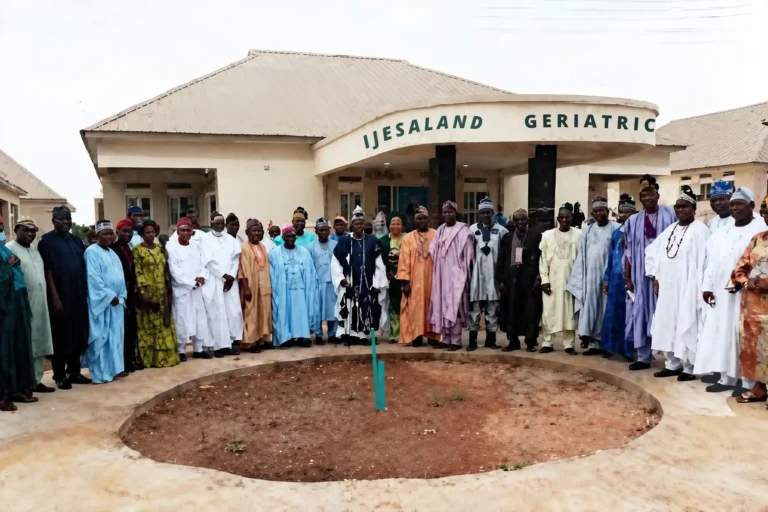
The initiative addressed a specific concern: the low representation of Ijesa students at the Federal Technical College, Ilesa, an institution located within the community. Through engagement with the college authorities, the mobilisation of sponsors and the establishment of a scholarship management structure, the initiative sought to make technical education more accessible to qualified young people whose families might otherwise struggle to meet the cost.
As the nineteenth milestone in Fasuyi’s decade-long stewardship, the programme illustrates how identifying an educational gap and mobilising community resources can create opportunities for the next generation.
Identifying an Educational Gap
In 2023, Asiwaju Fasuyi reportedly observed that the Federal Technical College, Ilesa, had approximately 1,400 students, of whom only 34 were of Ijesa origin.
The low representation was a concern because the institution was located in Ijesaland and offered technical and science-based education relevant to employment, entrepreneurship and industrial development.
Engagements with the college’s management reportedly indicated that the cost of tuition, boarding and other educational expenses was a significant barrier for some qualified Ijesa families.
The challenge was therefore not simply the availability of a technical institution within the community. It was also the ability of young people from the host community to gain admission and remain in school.
Fasuyi responded by engaging the college’s management and pursuing opportunities for more Ijesa students to access the institution. The objective was to address the financial barrier through coordinated scholarship support rather than relying solely on individual families to bear the cost.
From Problem Identification to Admission Opportunities
Following engagements with the college management and further visits to Abuja, the initiative reportedly secured 250 admission opportunities for qualified Ijesa students in 2023.
This was an important first step. Admission opportunities alone, however, could not resolve the problem if successful candidates were unable to afford the costs associated with their education.
The next task was therefore to mobilise the financial resources required to support the students through their studies.
Through ICDA, the initiative developed into a community-backed scholarship scheme for indigent students from the six local government areas of Ijesaland. The arrangement linked the admission opportunities with a structured funding and administration process intended to help beneficiaries continue their education.
The experience demonstrates an important principle in educational development: opening the door to admission must be accompanied by practical measures that allow students to enter, remain in and complete their programmes.
Mobilising 78 Ijesa Sponsors
The scholarship scheme brought together 78 Ijesa compatriots who contributed towards the education of the selected students. According to the published account, the sponsors included professionals, professors, traditional titleholders, community groups and anonymous donors.
Their contributions varied, with individual sponsors supporting between one and 25 students.
This collective funding model distributed responsibility across a network of people who shared an interest in improving educational opportunities for young Ijesas. Rather than depending on a single benefactor, the initiative mobilised support from a broader group of contributors.
The scholarship scheme covered three consecutive academic sessions: 2023/2024, 2024/2025 and 2025/2026.
Its reported structure centred on 250 scholarship beneficiaries drawn from across Ijesaland’s six local government areas. The programme provided a practical example of how community networks can pool resources to address a common educational challenge.
Fasuyi’s role was to identify the problem, engage relevant authorities and mobilise the community around a response. The financial contributions of the 78 sponsors, together with the work of the scholarship administrators and the college, were essential parts of the initiative.
Establishing a Framework for Administration and Accountability
The initiative was administered through the Federal Technical College Scholarship Management Committee (FSMC), which was responsible for managing scholarship-related processes.
The published account states that the committee documented scholarship offers and their acceptance and made the names of sponsors and beneficiaries available. These measures were intended to support transparency and accountability in the management of the scheme.
The programme also demonstrated attention to financial details. When an additional Remita portal charge of ₦261.25 per student was reportedly imposed, the committee settled the expense from interest earned on a ₦25 million scholarship fund held with a bank, rather than passing the additional charge on to sponsors.
The committee also processed payments ahead of the students’ resumption in October 2023 and arranged certificates of honour for sponsors without charging the scholarship account.
These reported practices illustrate why the administration of a scholarship scheme matters as much as resource mobilisation. Clear records, timely payments and responsible financial management help ensure that contributions are directed towards their intended educational purpose.
Connecting Sponsors with Students
The programme was designed to extend beyond the payment of school fees by encouraging relationships between sponsors and beneficiaries.
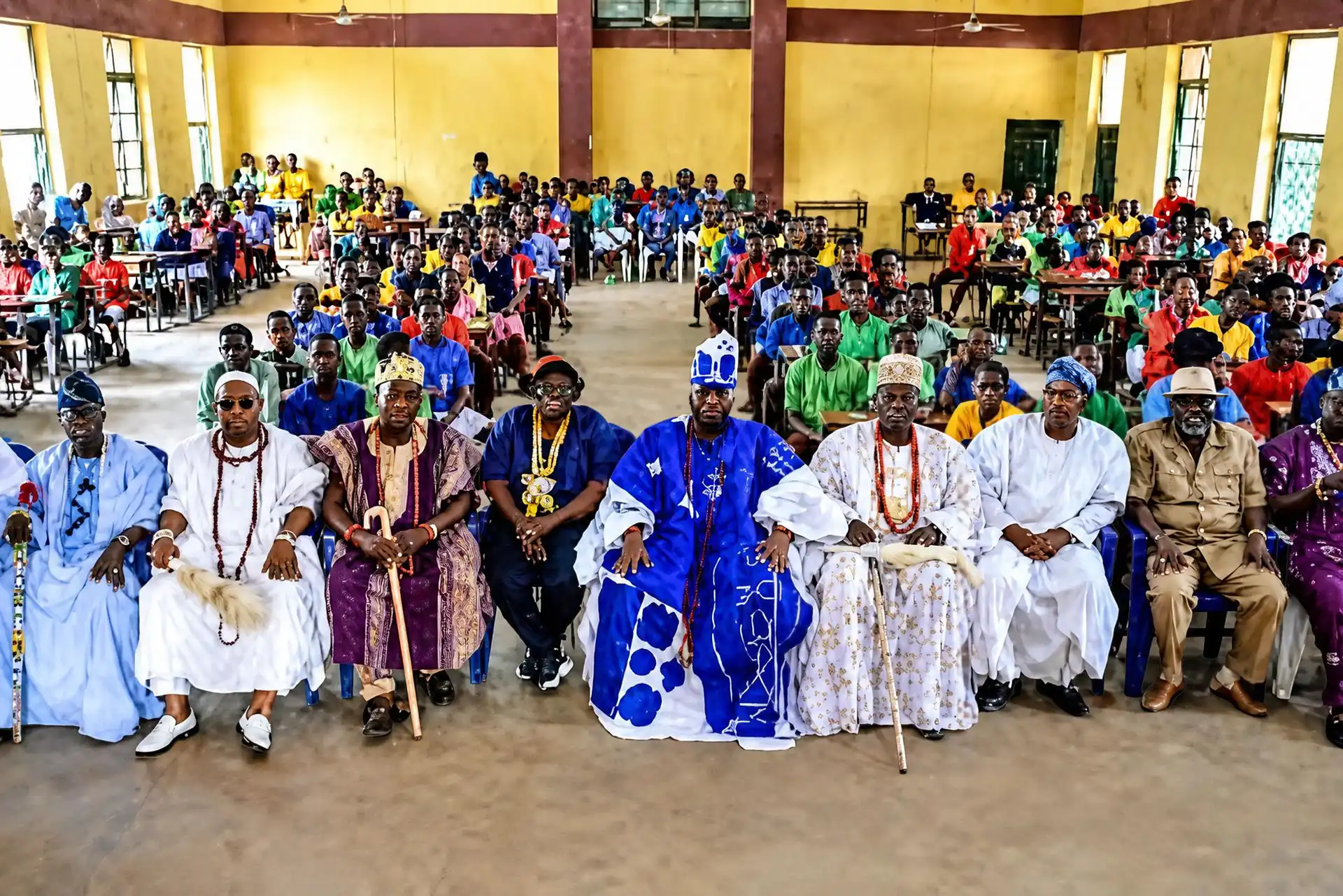
On 25 May 2024, ICDA reportedly organised a meeting of scholarship holders at the college’s assembly hall in Ilesa. The gathering was attended by 21 sponsors and all 250 beneficiaries.
The meeting provided an opportunity for sponsors to interact directly with the students they were supporting. Such engagement can help sponsors understand the experiences of beneficiaries and encourage students to appreciate the collective effort behind their education.
It can also create opportunities for mentorship and guidance, helping young people connect their educational experience with future career and enterprise possibilities.
A scholarship is most valuable when it does more than remove an immediate financial barrier. By encouraging responsibility, discipline and a sense of shared purpose, a well-managed programme can help beneficiaries understand their obligations to themselves, their sponsors and their communities.
The Next Phase: Mobilising 200 More Students
Following the scholarship scheme covering the 2023/2024 to 2025/2026 academic sessions, the published account reports a further mobilisation of 200 students for admission into the Federal Technical College, Ilesa, for the 2026/2027 academic session.
This next phase extends the effort to increase access to technical education for Ijesa youths. It should be distinguished from the earlier scheme: the initial programme was structured around 250 scholarship beneficiaries across three academic sessions, while the newer intervention concerns 200 additional students for the 2026/2027 session.
The continuation of the initiative reflects the need to sustain educational access beyond a single admission cycle. New cohorts of students require opportunities to enter technical education, while the wider community benefits when those who complete their training are able to apply their knowledge productively.
The new intake also reinforces the importance of maintaining a reliable sponsorship network, clear beneficiary-selection procedures and an administrative framework capable of supporting students throughout their studies.
The long-term impact will depend on implementation, continued funding and the students’ ability to complete their programmes and apply their skills.
Why Technical and Vocational Education Matters
Technical education prepares young people for practical roles that are essential to the economy. Depending on their areas of study, graduates may pursue careers in technical services, manufacturing, construction, engineering-related fields, maintenance, technology or other skilled occupations.
Practical training can also support entrepreneurship. A technically skilled graduate may establish a service business, provide specialised services to local enterprises or build a venture that eventually employs others.
For Ijesaland, a stronger pipeline of technically trained young people can therefore contribute to both individual livelihoods and the wider local economy.
The scholarship initiative complements other youth-development efforts associated with Fasuyi and ICDA, including agricultural training, ICT skills development and enterprise education. Each programme addresses a different dimension of capability, but they share an emphasis on preparing young people to participate productively in economic life.
These interventions also highlight the importance of matching educational opportunities with the needs and aspirations of young people. Access to training is a starting point; the next challenge is to help graduates connect their skills with employment, enterprise and further professional development.
Shared Responsibility for the Next Generation
The Federal Technical College scholarship initiative demonstrates the potential of organised community support in addressing educational barriers.
Its reported progress began with the identification of low representation among Ijesa students, followed by engagement with the institution, the mobilisation of admission opportunities and the contributions of 78 sponsors. The subsequent extension to a new intake of 200 students for the 2026/2027 session represents a further stage in the effort.
The programme is a collective undertaking. It depends on the initiative of community leaders, the generosity of sponsors, the administration provided by the scholarship committee, the cooperation of the college and the commitment of the students themselves.
Sustaining its impact will require continued attention to transparent administration, student welfare, completion rates and the pathways available to graduates after their training.
Ultimately, investing in technical education is an investment in human capability. By helping young people gain access to practical learning, Ijesaland can broaden the range of opportunities available to its next generation and strengthen the skills base needed for future development.
Through the ICDA-backed scholarship initiative, Asiwaju Olayinka Fasuyi and participating Ijesa compatriots have sought to make that investment a shared responsibility—one that connects community resources today with the skills, livelihoods and possibilities of tomorrow.