01 — Building Institutions, Uniting Ijesaland
A Vision for Collective Development, Peace and Shared Progress
The conception of the Ijesa Community Development Assembly was driven by the need to move development efforts beyond isolated individual or community initiatives and create a coordinated Pan-Ijesa platform for collective development.
The formal establishment and registration of ICDA with the Corporate Affairs Commission provided an institutional framework through which stakeholders across the six Local Government Areas of Ijesaland could work together.
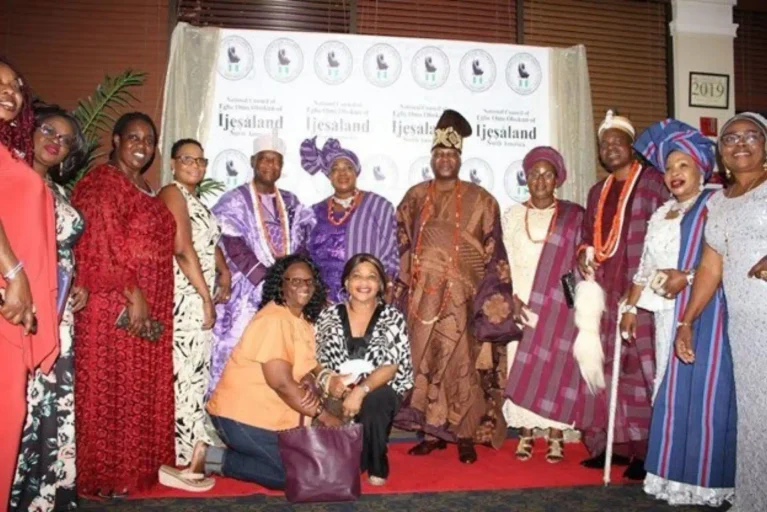
The platform brought together a broad spectrum of stakeholders, including traditional rulers, community leaders, professionals, business leaders, youths, women, development organisations and Ijesas in the diaspora.
It was, fundamentally, vision translated into institution-building.
Rather than concentrating only on individual projects, ICDA was conceived as a structure through which common challenges could be identified, resources mobilised, partnerships developed and programmes pursued for the benefit of communities across Ijesaland.
Its areas of focus have included:
- Education
- Healthcare
- Youth empowerment
- Infrastructure
- Agriculture
- Economic development
- Technology
- Social welfare
The underlying philosophy was clear: development becomes more sustainable when people are organised around shared objectives and provided with a structure through which their collective resources can be deployed effectively.
Leadership by Example
For Asiwaju Olayinka Fasuyi, mobilisation has consistently been associated with personal commitment.
The philosophy of leadership by example places emphasis on sacrifice, participation and visible commitment to the objectives being pursued.
Rather than simply asking others to contribute to a cause, the approach has been to demonstrate commitment personally.
His practice of being among the first—and often among the highest—contributors to initiatives has served as a practical expression of that philosophy.
The message is straightforward:
Leadership must be demonstrated before it can be demanded of others.
Through personal example, appeals for collective support become more credible, and stakeholders are encouraged to see development not as somebody else’s responsibility but as a shared obligation.
Integrity and the Trust to Mobilise
No Pan-Ijesa institution can function effectively without the confidence of the people and organisations involved.
Integrity has therefore remained a central pillar of Asiwaju’s development philosophy.
It is reflected in the consistency between words and actions, faithfulness to commitments and the willingness to place collective interests above personal interests.
Trust, in this context, is not merely a desirable quality. It is an essential instrument for mobilisation.
The record of this period also states that throughout his decade as Asiwaju, Fasuyi did not receive financial support from individuals, organisations or government for the initiatives he supported, relying instead on his personal resources.
This personal financial commitment is presented as one of the expressions of independence and sacrifice associated with his approach to community development.
Transparency and Collective Ownership
The same principles extended to the management of collective resources.
For ICDA, transparency was regarded as essential to maintaining confidence among stakeholders.
Consultation, open communication and clarity in the management of resources were intended to ensure that those involved could understand the development process and participate meaningfully in it.
A particularly important principle was that ICDA project funds were not to be disbursed or spent without the approval of the General House.
This approach was designed to minimise suspicion, strengthen trust and ensure that development initiatives remained the responsibility of the collective rather than the preserve of a few individuals.
Transparency, therefore, was not treated simply as an administrative requirement.
It became part of the mechanism through which collective ownership was built and sustained.
Bringing Traditional Rulers Together
Institution-building was only one dimension of the development vision.
Asiwaju also recognised that sustainable development required healthy relationships among the traditional institutions and communities of Ijesaland.
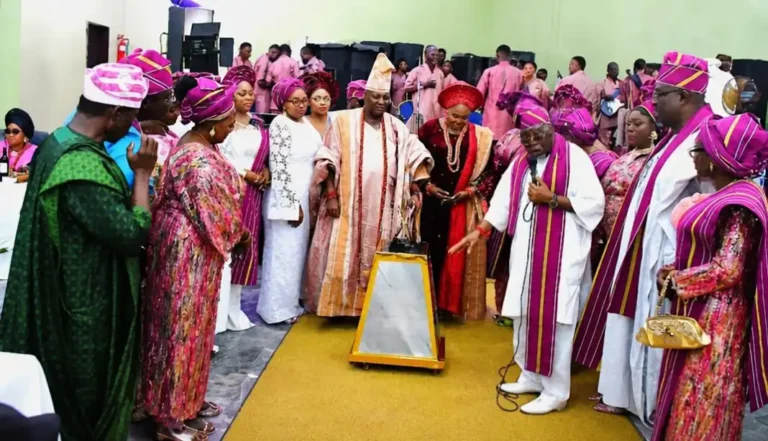
This understanding informed the Unity, Peace and Development Meetings of Traditional Rulers and Communities in Ijesaland, initiated and convened in 2019.
At the centre of the initiative was a conviction that has continued to resonate throughout the journey:
“In the united entity, we are strong; in the divided body, we fall.”
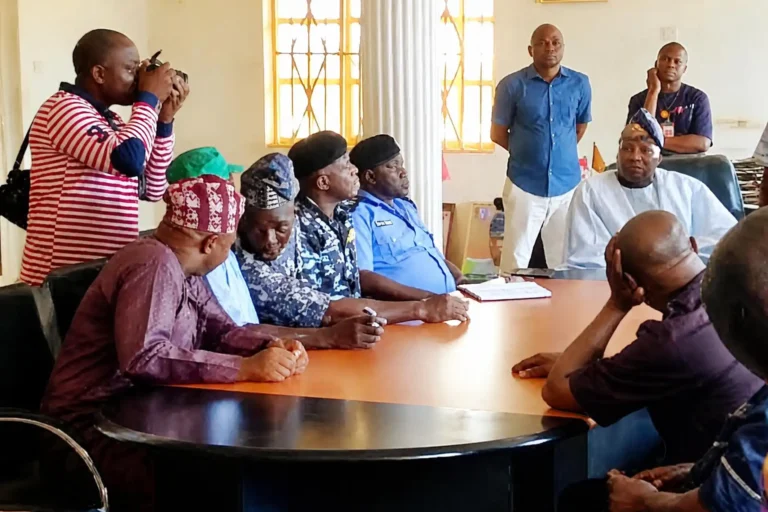
The objective was to harness the collective wisdom, authority and influence of Ijesaland’s Traditional Rulers by creating opportunities for them to meet regularly, exchange views and deliberate on matters affecting the land.
These gatherings were therefore conceived as more than ceremonial meetings.
They were intended to provide a platform for dialogue, reconciliation, mutual understanding and collective action.
From Concept to Action
The contribution of Asiwaju to the Unity Meetings can be understood through four interconnected responsibilities:
1. Conceptualisation
The idea was to establish a structured and sustained forum through which Traditional Rulers across Ijesaland could meet, interact and collectively address matters of common interest.
The underlying belief was that stronger relationships among traditional institutions would contribute to greater peace, cohesion and sustainable development.
2. Initiative
Having conceived the idea, Asiwaju personally took responsibility for turning the vision into reality.
He embarked on extensive mobilisation across Ijesa Central, Ijesa North and Ijesa South, travelling from palace to palace and engaging Traditional Rulers individually.
These consultations were aimed at explaining the relevance of the initiative, building understanding and securing support for regular Unity Meetings.
The mobilisation was therefore not left to assumption.
It was pursued personally and deliberately.
3. Convening
Through sustained engagement, consultation and personal commitment, the necessary cooperation and practical support were assembled to bring the Traditional Rulers together.
The resulting platform created opportunities for monarchs from different parts of Ijesaland to interact directly, deliberate on shared concerns, develop mutual understanding and strengthen relationships.
4. Organisation
The work did not end with the conception of the idea.
Asiwaju remained actively involved in coordinating participation, maintaining communication with the participating palaces and facilitating the arrangements necessary for the meetings.
His familiarity with the traditional institutions of Ijesaland became an important part of this process.
The distinction is significant:
He did not merely propose that the Traditional Rulers should meet. He conceived the idea, initiated the mobilisation, convened the stakeholders and participated in creating the practical framework through which the initiative could function.
The Ifewara Turning Point
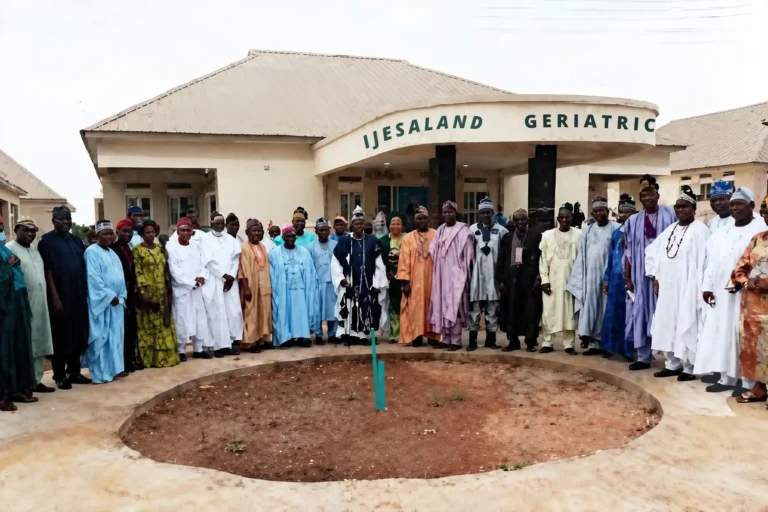
The first major Unity, Peace and Development Meeting of Traditional Rulers and Communities in Ijesaland was held at Ifewara on 19 March 2019.
It became an important moment in the effort to strengthen relationships among the traditional institutions of Ijesaland.
At the time, relationships among some Traditional Rulers had reportedly been affected by grievances and misunderstandings, including reluctance by some to attend functions organised by the Owa Obokun Adimula and Paramount Ruler of Ijesaland.
The significance of the Ifewara meeting therefore went beyond bringing people together in one location.
It created a structured environment in which differences could be discussed, relationships reconsidered and opportunities for reconciliation explored.
The meeting provided room for dialogue, understanding and forgiveness, while reinforcing the broader recognition that the traditional institutions of Ijesaland share a common heritage and common responsibilities towards the development of the land.
When Traditional Rulers Met One Another
One of the most remarkable dimensions of the Unity Meetings was the opportunity they created for Traditional Rulers to interact directly.
According to the record of the initiative, some Traditional Rulers in Ijesaland were meeting one another for the first time at these gatherings.
That reality illustrated the depth of the relational gaps that existed despite the shared cultural and historical identity of the people.
The meetings created a physical and institutional space where previously distant relationships could begin to develop.
Introductions became conversations.
Conversations created understanding.
Understanding created the possibility of renewed cooperation.
One United Ijesaland
The idea of One United Ijesaland became an important theme of the initiative.
The objective was to encourage Traditional Rulers and communities to look beyond geographical and historical distinctions and place greater emphasis on their shared heritage and common aspirations.
The initiative sought to move the conversation away from divisions commonly expressed through Ijesa North, Ijesa South and Ijesa Central, towards a broader understanding of Ijesaland as one cultural and development community.
The Ifewara meeting consequently provided an opportunity for conversations around peace, reconciliation, forgiveness and cooperation.
This was important because development cannot be separated from relationships.
While ICDA was designed to provide an institutional mechanism for coordinating development, the Unity Meetings sought to strengthen the relationships and trust required for collective development to succeed.
Strengthening the Owa’s Institution
The process also contributed to renewed relationships with the institution of the Owa Obokun Adimula, the Paramount Ruler of Ijesaland.
Where grievances had previously affected participation in functions organised by the Owa’s institution, the Unity Meetings created a platform for dialogue and engagement.
The broader objective was greater cooperation among the traditional institutions and stronger recognition of the Owa Obokun Adimula’s role within the traditional structure of Ijesaland.
In this sense, the initiative addressed more than interpersonal or ceremonial relationships.
It addressed a potential obstacle to collective action and coordinated development.
The Ripple Effect Beyond Ijesaland
The influence of the Unity initiative was not limited to the traditional institutions within Ijesaland.
The account of the initiative records a wider ripple effect among Ijesas in the diaspora.
As relationships among Traditional Rulers and communities improved at home, some Ijesas living outside Nigeria who had previously maintained limited relationships with one another reportedly began reconnecting.
This reflected a broader principle:
When relationships are strengthened at home, the sense of shared identity can extend across geographical boundaries.
The resulting network has the potential to expand access to relationships, expertise, partnerships and resources that can ultimately benefit Ijesaland.
From Unity to Development
For Asiwaju Olayinka Fasuyi, development has never been limited to physical infrastructure.
Roads, schools, hospitals and other physical projects are important, but sustainable development also requires trust, cooperation, strong institutions and the ability to mobilise people around common objectives.
A community may possess considerable human, financial and institutional resources and still struggle to deploy them collectively if relationships remain weak.
Conversely, when institutions communicate, stakeholders trust one another and communities are united around common objectives, the capacity for collective development becomes considerably stronger.
This is where ICDA and the Unity Meetings complement one another.
ICDA addressed the question of how development could be coordinated.
The Unity Meetings addressed the question of how relationships could be strengthened to make collective action possible.
Together, they represented a broader development philosophy:
Build institutions.
Strengthen relationships.
Mobilise people.
Create partnerships.
Direct collective resources towards shared objectives.
Sustaining the Dialogue
The first Unity Meeting at Ifewara was followed by a second major engagement at Ijebu-Jesa on 6 November 2019.
The Second Unity, Peace and Development Meeting of Traditional Rulers in Ijesaland continued the dialogue initiated at Ifewara and provided another opportunity for Traditional Rulers and stakeholders to strengthen relationships, improve communication and renew their commitment to peace and development.
The continuation of the initiative was significant.
It demonstrated that the objective was not simply to organise a single event and declare success.
Rather, the intention was to establish an enduring culture of engagement.
That approach reflects a broader understanding of accountability: not merely accounting for resources, but remaining responsible for commitments and ensuring that initiatives continue to produce value beyond their initial launch.
Five Principles, One Development Philosophy
The story of ICDA and the Unity, Peace and Development Meetings illustrates five principles that have characterised Asiwaju Olayinka Fasuyi’s approach to development advocacy:
Leadership by Example
Personal commitment provides the foundation for mobilising others.
Vision
Development requires the ability to see beyond immediate challenges and build structures capable of producing lasting value.
Integrity
Trust is essential to bringing diverse stakeholders together around a common purpose.
Transparency
People are more willing to participate when they understand how collective resources and decisions are managed.
Accountability
Development initiatives must be treated as continuing responsibilities rather than one-off achievements.
These principles may be expressed through different initiatives, but they are connected by one overarching philosophy:
Ijesaland’s progress requires people to work together.
A Foundation for Collective Development
The establishment of ICDA and the Unity, Peace and Development Meetings represent two complementary dimensions of Asiwaju Olayinka Fasuyi’s development advocacy.
One sought to build an institutional platform for coordinated development.
The other sought to strengthen relationships among the traditional institutions and communities upon which collective action depends.
Together, they speak to a larger vision of Ijesaland as a community capable of identifying its challenges, mobilising its people, building partnerships and deploying its collective resources towards common objectives.
The significance of these initiatives therefore extends beyond the meetings held or the institutions established.
They represent an enduring belief that unity is an asset, trust is a development resource, institutions are vehicles for progress, and leadership carries the responsibility to bring people together around a shared future.
As the decade of service continues to be documented, this milestone stands as an important part of the record:
the work of building the structures, relationships and collective confidence required for a stronger and more united Ijesaland.
The Journey Continues
Milestone 01 is only the beginning of the documented journey.
The subsequent chapters will examine other initiatives, interventions and development efforts that have shaped the first decade of Asiwaju Olayinka Fasuyi’s service to Ijesaland.
Each milestone tells a different story.
Together, they tell one larger story:
A decade of vision.
A decade of service.
A decade of collective action.
A decade of building for Ijesaland.