
02 — Investing in the Future: How AYFF Has Supported Over 2,500 Ijesa Students
Advancing Education, Encouraging Excellence and Expanding Opportunity Across Ijesaland
Education remains one of the most enduring investments a community can make in its future. It equips young people with knowledge, expands their opportunities and strengthens the human capital upon which sustainable development depends.
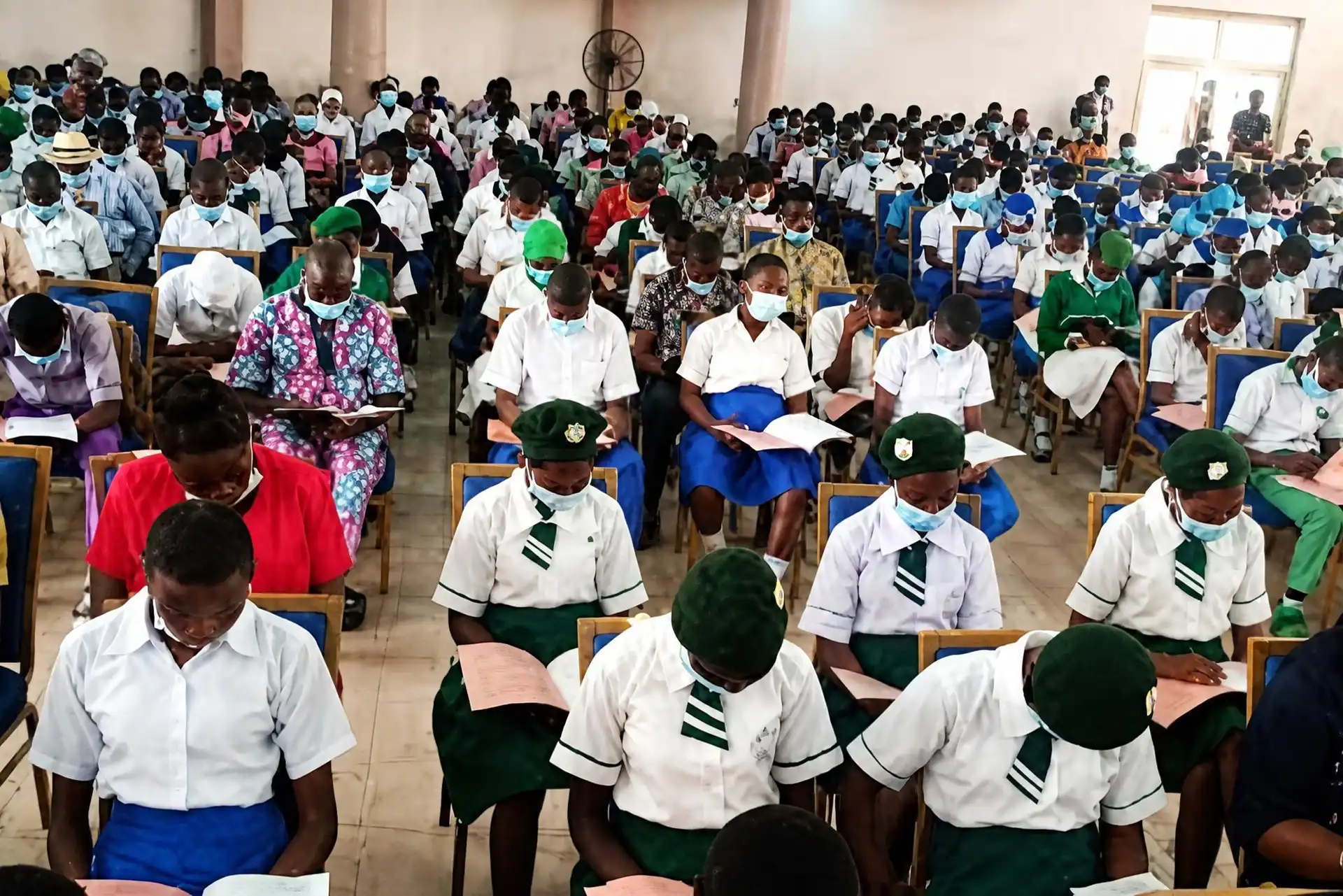
This understanding has informed the educational interventions of the Asiwaju Yinka Fasuyi Foundation (AYFF), which has supported more than 2,500 students from public secondary schools across the six Local Government Areas of Ijesaland through the payment of West African Senior School Certificate Examination (WAEC) fees and bursary awards.
The initiative reflects a commitment to reducing the financial pressures that can affect students’ academic journeys, recognising educational achievement and creating opportunities for young people to pursue their ambitions.
For Asiwaju Olayinka Fasuyi, Asiwaju of Ijesaland, supporting education is not merely an act of philanthropy. It is an investment in the future of Ijesaland and in the potential of the next generation.
The Foundation of a People-Centred Initiative
The organisation now known as the Asiwaju Yinka Fasuyi Foundation began as the Olayinka Fasuyi Foundation, a family-owned philanthropic initiative established to support development in Ijesaland.
Following the installation of Asiwaju Olayinka Fasuyi and Yeye Asiwaju Dr. Olubisi Fasuyi, the Foundation was rebranded to reflect their traditional titles and continuing commitment to community service.
From its inception, the Foundation adopted a people-centred and non-political approach to philanthropy. Education emerged as its first major area of intervention, reflecting the recognition that young people need both access to learning and the practical support required to succeed.
The Foundation’s approach extended beyond providing immediate financial assistance. It sought to address some of the challenges affecting students’ preparation for examinations while encouraging a culture that recognises and rewards academic effort.
Strengthening Students Through the Teachers’ Support Programme
Before the WAEC bursary scheme became a major feature of its educational intervention, the Foundation introduced a Teachers’ Support Programme.
Under this initiative, qualified teachers provided additional lessons in core examination subjects to final-year students in selected public secondary schools. Participating teachers received monthly stipends for two years.
The programme was designed to strengthen students’ preparation for important examinations by providing supplementary academic support.
This early intervention reflected a broader understanding of educational development: helping students succeed requires more than meeting examination-related expenses. It also requires attention to teaching, learning and the quality of preparation available to young people.
By supporting additional lessons, the Foundation sought to contribute to students’ readiness for examinations while recognising the role teachers play in shaping educational outcomes.
The WAEC Fees Bursary Award Scheme
Building on its initial educational intervention, AYFF introduced the WAEC Fees Bursary Award Scheme to provide financial support for students preparing for their senior secondary school examinations.
The scheme initially targeted the five best-performing students in each public secondary school across Ijesaland. Its design combined two important objectives: easing the financial burden on families and encouraging students to pursue academic excellence.
The programme’s growth over successive editions demonstrates the expanding reach of this intervention.
A growing record of educational support
2017 — The First Edition
The inaugural edition supported 100 students. The event brought together traditional rulers, school principals, parents and community leaders, establishing the scheme as a community-supported educational initiative.
2018 — Expanding the Reach
The second edition benefited 200 students and was chaired by Professor Oyewusi Ibidapo-Obe, former Vice-Chancellor of the University of Lagos.
2020 — Reaching More Students
The fourth edition, chaired by Professor Idowu Olayinka, former Vice-Chancellor of the University of Ibadan, supported 350 students.
Through subsequent editions, the Foundation’s educational support expanded to reach more than 2,500 students from public secondary schools across the six Local Government Areas of Ijesaland.
The figures represent more than the number of bursaries awarded. They reflect sustained attention to educational opportunity and a continuing effort to ensure that financial constraints do not become an unnecessary obstacle for deserving students.

Traditional Institutions and Community Participation
One of the distinctive features of the WAEC bursary programme has been the participation of traditional rulers and other community stakeholders.
The late His Imperial Majesty, Oba Dr. Gabriel Adekunle Aromolaran II, consistently attended the award ceremonies alongside other traditional rulers from across Ijesaland.
Their participation brought an important community dimension to the programme. Students were recognised in an environment that connected academic achievement with the support, expectations and aspirations of the communities to which they belong.
Parents, school principals, education stakeholders and community leaders also participated in the ceremonies.
These gatherings therefore served purposes beyond the presentation of financial assistance. They created opportunities for interaction among students from different parts of Ijesaland and encouraged wider conversations about education, student welfare and the development of young people.
The programme demonstrated how philanthropic initiatives can bring institutions and communities together around a shared priority.
Adapting the Programme to Changing Security Conditions
As security concerns, including threats of kidnapping, emerged in Ijesaland, the Foundation and programme organisers adjusted the way assistance was delivered.
Rather than bringing large numbers of students together at a central venue, subsequent presentations of WAEC support were taken directly to individual schools.
This change was intended to minimise students’ exposure to security risks while allowing the educational intervention to continue.
The adjustment illustrates an important aspect of sustainable community service: effective initiatives must remain responsive to changing circumstances.
The objective was not simply to maintain an established programme in its original form, but to preserve its benefits while taking account of the safety and welfare of the students it was created to serve.
Beyond Financial Assistance: Building Human Capital
The significance of AYFF’s educational intervention extends beyond the payment of examination fees.
For parents and guardians, the support helps ease the financial pressure associated with preparing children for important examinations.
For students, it provides practical assistance while reinforcing the value of diligence, achievement and continued learning.
For schools, it creates an additional point of engagement with families, traditional institutions and community stakeholders.
For Ijesaland, it represents an investment in the knowledge, skills and potential of its younger generation.
These dimensions are interconnected. A student who receives timely educational support is better positioned to concentrate on preparation for examinations, while a community that values academic achievement strengthens the foundations for future social and economic progress.
The Foundation’s intervention also highlights the importance of recognising education as a shared responsibility. Families, schools, community institutions, philanthropic organisations and other stakeholders all have roles to play in creating an environment where young people can learn and develop.

Five Principles Reflected in the Initiative
The AYFF educational programme illustrates five principles associated with Asiwaju Olayinka Fasuyi’s approach to service and community development.
1. Leadership by Example
Commitment to community development is demonstrated through practical action and sustained support for initiatives that address real needs.
2. Vision
The programme reflects an understanding that supporting students today contributes to the human capital and development prospects of tomorrow.
3. Integrity
A people-centred approach places the needs of beneficiaries and the purpose of the initiative at the heart of its activities.
4. Transparency
Clear programme objectives and defined beneficiary criteria help establish confidence in the administration of educational support.
5. Accountability
Continuity, responsiveness and attention to outcomes are essential to ensuring that philanthropic interventions remain relevant to the communities they serve.
Together, these principles reinforce the idea that meaningful philanthropy should go beyond one-off assistance. It should seek to create sustained value for individuals and communities.
Investing in the Next Generation of Ijesaland
The educational intervention of the Asiwaju Yinka Fasuyi Foundation represents an important milestone in the continuing story of development advocacy associated with Asiwaju Olayinka Fasuyi.
By supporting more than 2,500 students through WAEC fees and bursaries, while also investing in supplementary teaching through the Teachers’ Support Programme, the Foundation has contributed to an effort to strengthen educational opportunity across Ijesaland.
The wider significance lies in the principle behind the intervention: young people deserve opportunities to demonstrate their abilities, pursue their ambitions and contribute meaningfully to society.
A community’s future is shaped not only by the infrastructure it builds, but also by the knowledge it cultivates, the talent it develops and the opportunities it creates for the next generation.
Through its educational support, AYFF has helped advance that objective.
Every student supported represents an investment in human potential. Every opportunity created strengthens the promise of a more educated and prosperous Ijesaland.
The Journey Continues
Milestone 02 forms part of the continuing documentation of Asiwaju Olayinka Fasuyi’s decade of service and development advocacy in Ijesaland.
It records an educational intervention built around practical support, academic encouragement and community participation.
The broader lesson remains enduring: when communities invest in their young people, they invest in the future they hope to build.
A decade of service. A commitment to education. An investment in the future of Ijesaland.