11 — From Training to Enterprise: How Asiwaju Olayinka Fasuyi Initiated & Opened Agribusiness Opportunities for 85 Ijesa Youths
The story of the ICDA–Leventis partnership, agricultural skills development and a community-driven pathway towards youth empowerment
Agriculture remains an important avenue for employment, enterprise development and food production. For young people, however, the opportunity to build a successful agricultural business often depends on more than interest or access to land. Practical training, technical knowledge, start-up capital and sustained support can make the difference between an ambition and a viable enterprise.
In Ijesaland, Asiwaju Olayinka Fasuyi, Asiwaju of Ijesaland, helped advance an initiative designed to connect young people with these opportunities through a partnership between the Ijesa Community Development Assembly (ICDA) and the Leventis Foundation Agricultural Training School in Ilesa.
The intervention addressed a longstanding concern: despite the presence of an established agricultural training institution within Ijesaland, relatively few Ijesa youths had benefited from its programmes. Through engagement with the school’s management and board, Fasuyi helped secure an arrangement that opened admission opportunities for young people from across the six local government areas of Ijesaland.
The initiative subsequently progressed from access to training, graduation and further financial support for agribusiness ventures.
Its first major outcome was the graduation of 85 Ijesa youths in December 2024. The programme later extended to grants for 38 young agripreneurs and a revolving-loan initiative intended to help trained beneficiaries establish or expand productive ventures.
The story demonstrates how identifying an overlooked opportunity, building institutional partnerships and connecting training with enterprise support can contribute to a more practical approach to youth empowerment.
Recognising an Overlooked Opportunity
For more than three decades, the Leventis Foundation Agricultural Training School had operated in Ilesa, providing agricultural education and practical training.
Yet, according to the account of this milestone, fewer than three students from Ijesaland had been admitted before the intervention that began in 2024.
This presented an important development question: how could an agricultural training institution located within Ijesaland operate for so many years without its opportunities being more accessible to young people in the surrounding communities?
The issue was particularly relevant in a region where youth unemployment, the need for sustainable livelihoods and the potential of agriculture remained important concerns.
The challenge was not simply the absence of an institution. The training facility already existed. What was needed was a deliberate effort to connect its capacity with the needs and aspirations of Ijesa youths.
The school also faced an operational challenge. The source account reports that it had remained closed for three consecutive years amid a failure by the Osun State Government to remit the financial support it had previously provided. By the fourth year, the institution was reportedly at risk of permanent closure.
This situation presented both a challenge and an opportunity: the school’s training capacity needed to be sustained, while young people from Ijesaland needed a more direct pathway to benefit from it.

The Intervention: Engaging the School and Its Board
In 2024, Fasuyi engaged the management of the Leventis Foundation Agricultural Training School in Ilesa and subsequently met with the Foundation’s Board of Directors in Abuja.
The purpose was to explore an arrangement that would secure meaningful admission opportunities for qualified Ijesa youths and connect the school’s training capacity to the community’s development needs.
The engagement culminated, according to the published account, in an exceptional admission arrangement for the 2024 programme.
All 100 admission slots were reserved for indigenes of Ijesaland, departing from the school’s longstanding national admission model, under which Osun State would ordinarily have received only a small allocation.
The arrangement enabled candidates from the six local government areas of Ijesaland to participate in the one-year Agripreneurship Training Programme.
This was an important step in translating a community need into a practical opportunity. Rather than establishing an entirely new training institution, the initiative sought to make better use of an existing facility and its expertise.
Fasuyi’s contribution was central to initiating the engagement and pursuing the arrangement. Its implementation, however, depended on cooperation among the Foundation, the school, ICDA and the participating young people.
December 12, 2024: 85 Ijesa Youths Graduate
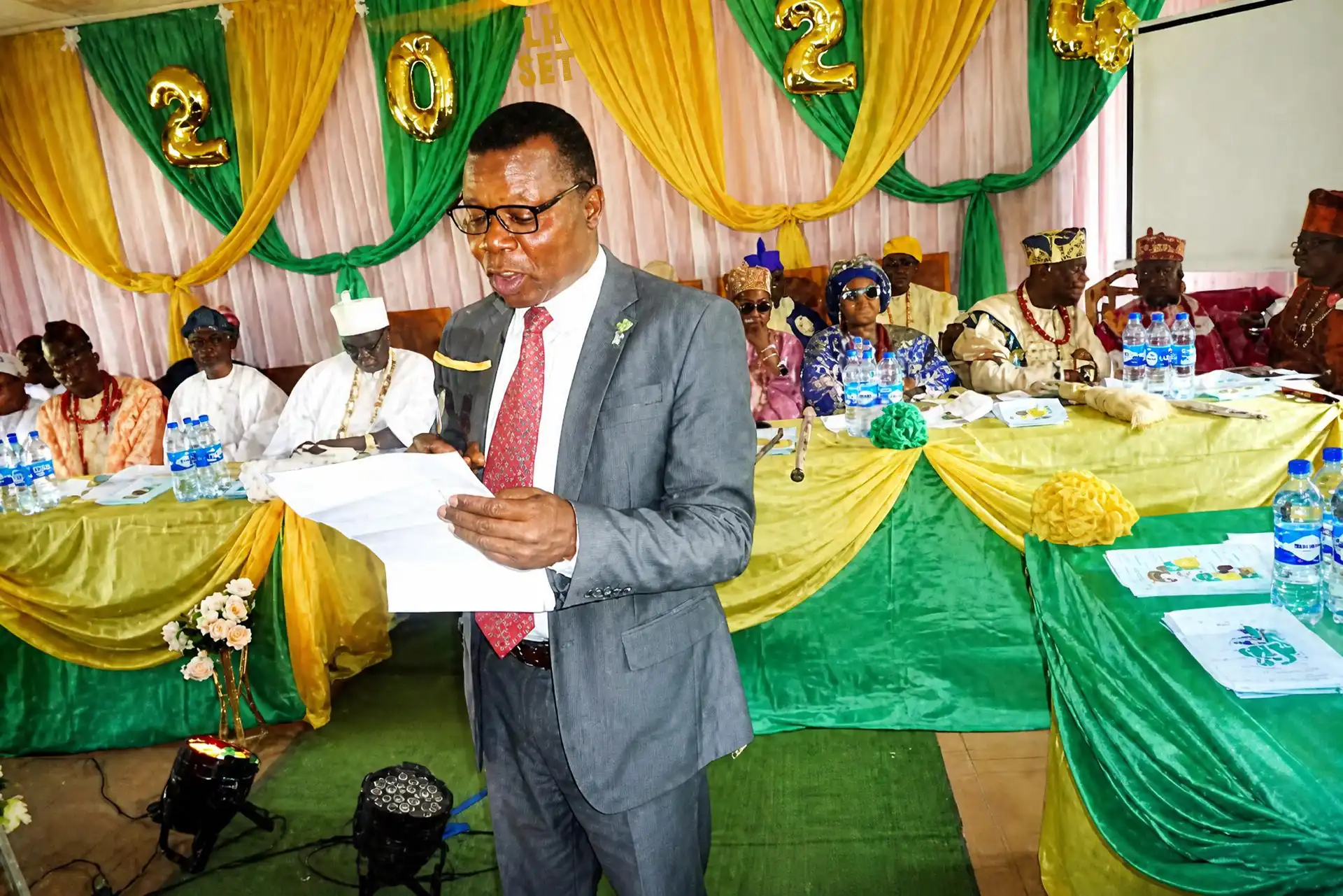
The first major outcome became visible on Thursday, December 12, 2024, when 85 Ijesa youths graduated at the Leventis Foundation Agricultural Training School’s 30th graduation ceremony.
The graduates formed part of a total of 96 students at the ceremony, having completed the one-year training programme.
Their training covered a range of agricultural and agribusiness disciplines, including:
- Crop production and cash crops
- Animal husbandry
- Fisheries
- Poultry production
- Piggery
- Vegetable and fruit production
- Agricultural engineering
- Beekeeping
The programme combined classroom instruction with practical field experience, giving participants the opportunity to learn about agricultural production and the techniques required to operate productive ventures.
The range of subjects was important because agriculture encompasses multiple business opportunities. Depending on their interests, resources and local market conditions, trained participants could explore crop cultivation, livestock, fisheries, horticulture and related agricultural activities.
The graduation therefore represented more than the completion of a course. It marked the first major result of an initiative that began with identifying a gap in access, engaging an established institution and creating a pathway for Ijesa youths to receive specialised training.
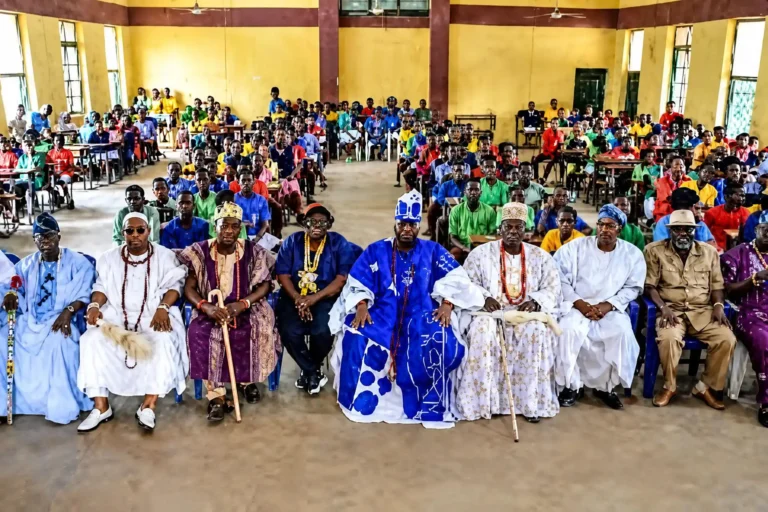
Representatives of traditional institutions, community organisations, government and the Leventis Foundation attended the ceremony.
Dr Felix Obhiye Obinyan, representing the Foundation’s Executive Director, Dr Hope Usieta, encouraged the graduates to apply their knowledge diligently and use their skills to build productive agricultural ventures. He also expressed the Foundation’s willingness to continue engaging with the community and government to support the trainees’ transition into productive agriculture.
The Special Assistant to the Osun State Governor on Agriculture, Hon. Olaniyan Akanfe, gave assurances of continued state government support for agricultural inputs to the school and encouraged the graduates to put their training into practice.
HRM Oba Kehinde Oyeleye, the Ogboni of Ipole-Ijesa and President of the Ijesa South Council of Traditional Rulers, similarly urged the beneficiaries to make good use of the opportunity.
These contributions reflected a shared interest in ensuring that training translated into productive activity beyond the classroom.
Moving from Training to Enterprise
Agricultural training can equip young people with valuable knowledge, but training alone does not guarantee that a participant can establish a viable business.
A graduate may understand poultry production, vegetable farming or fisheries management yet lack the funds to acquire equipment, purchase inputs, rent or prepare land, or meet the initial operating costs of a venture.
Recognising this challenge, ICDA pursued further support for graduates seeking to apply their training in practical business settings.
On April 7, 2025, ICDA held an interactive session with former trainees at the school in Ilesa. The meeting focused on their entrepreneurial aspirations and the resources required to establish new ventures or expand existing investments.
At the session, Fasuyi explained that patriotic Ijesa sons and daughters had contributed funds towards the initiative. According to the account, the money had been deposited with a microfinance bank for disbursement as repayable loans.
Beneficiaries were encouraged to form cooperative groups and work towards responsible use of the funds. Repayment was emphasised as a necessary part of the arrangement because recovered funds could be made available to other young people.
The revolving-loan concept was designed to extend the reach of the original contribution. Rather than treating the money as a one-time distribution, the model sought to create a continuing pool of support that could assist successive groups of trained youths.
The approach reflected an important principle of sustainable empowerment: financial support should be structured in a way that encourages responsibility while preserving opportunities for future beneficiaries.
Grants for 38 Young Agripreneurs
The partnership subsequently advanced through another form of financial assistance.
ICDA, working with the Leventis Foundation Agricultural Training School, provided non-refundable grants to 38 young agripreneurs who participated in the 2024 training programme.
The grants were intended to support ventures in different agricultural fields, including crop production, poultry, fisheries, piggery, cassava and plantain farming.
This stage was significant because it sought to help selected graduates move from acquiring skills to applying them in business activities.
For a young entrepreneur, access to start-up funds can help bridge the gap between having the knowledge to operate a venture and being able to purchase the inputs or equipment needed to begin.
The grants also recognised that beneficiaries could pursue different opportunities depending on their interests, experience and the resources available to them.
At the disbursement ceremony, representatives of ICDA encouraged recipients to exercise discipline, focus and accountability in managing the funds. Reverend Lowo Adebiyi, representing Fasuyi, and Chief Afolabi Igbaroola, Chairman of the ICDA–Leventis Partnership Committee, stressed the importance of applying the resources to their intended purposes.
Beneficiaries were required to sign formal agreements committing themselves to responsible use of the grants. They were also reminded that the management of the funds and evidence of progress could influence access to future opportunities.
These arrangements underscored the importance of accountability in community-funded empowerment programmes.
The provision of financial assistance is an important step, but its long-term value depends on how effectively the funds are converted into productive assets, operating capacity and sustainable businesses.
Early Signs of Practical Impact
Reports from the school and the interactive session with former trainees provided examples of how agricultural training could translate into economic activity.
At the April 2025 meeting, the school’s Principal, Dr Popoola, observed that some graduates were already making progress in agriculture. He cited dry-season vegetable farming by former trainees and remarked that increased production had contributed to lower vegetable prices in Ilesa between December and the time of the meeting.
He also described the experience of a former student who had initially struggled to adapt to the programme but subsequently began a poultry enterprise with a carton of day-old chicks. According to the account, the young entrepreneur expanded the operation through successive cycles of brooding and sales.
These examples illustrate the potential of practical training when participants have opportunities to apply what they learn.
They also point to the wider possibilities associated with agricultural enterprise. Productive ventures can provide income for their owners, create demand for inputs and services, contribute to local food supplies and potentially generate employment as businesses expand.
Individual examples do not, by themselves, establish the overall economic impact of the programme. However, they offer useful indications of how agricultural skills can support livelihoods when combined with initiative, resources and continued engagement.
For the programme to demonstrate its full value over time, the progress of graduates, the survival and growth of their businesses, and the employment or production outcomes associated with their ventures will remain important measures.
Extending the Opportunity to More Ijesa Youths
The initiative was not conceived solely as a one-off opportunity for the first graduating cohort.
ICDA and the Leventis Foundation Agricultural Training School subsequently announced a further agripreneurship training programme for 2026, intended to equip additional Ijesa youths with agricultural and entrepreneurial skills.
The programme was advertised as a fully sponsored, one-year opportunity covering tuition, training materials, accommodation, daily meals and monthly stipends for successful candidates.
By addressing these costs, the arrangement sought to reduce financial barriers that can prevent young people from accessing specialised training.
The programme also called on towns and communities across Ijesaland to nominate qualified candidates, with the aim of widening participation across the region.
Erelu Adejumoke Olafadehan, Coordinator of the ICDA–Leventis Partnership, explained that the initiative was intended to reach eligible young people across Ijesaland. The partnership also envisaged financial credits and grants for willing graduates seeking to establish viable agribusiness ventures after completing their training.
The announcement demonstrated the intention to build on the initial arrangement and create a continuing pathway through which more young people could access agricultural education and, potentially, enterprise support.
The actual reach and long-term outcomes of subsequent cohorts will depend on implementation, the number of participants trained and the support available to graduates after their studies.
The Role of ICDA and the Leventis Foundation
Although Fasuyi helped initiate the intervention, the programme’s development and implementation depended on institutional collaboration.
ICDA provided a community-development framework through which the needs of Ijesa youths could be identified, stakeholders engaged and further support organised.
The Leventis Foundation Agricultural Training School provided the training environment, agricultural expertise and practical learning opportunities through which the beneficiaries acquired their skills.
The school’s management and the Foundation’s leadership were important to the admission arrangement and the delivery of the training programme. Traditional rulers, community supporters and other stakeholders also contributed to the wider effort to promote youth development.
The initiative therefore illustrates how a community organisation can work with an established institution to address a local need without having to create an entirely new system from the ground up.
It also shows why partnerships require clearly understood responsibilities. The community helps identify needs and mobilise support; the training institution provides specialised instruction; contributors provide resources; and beneficiaries are expected to apply their learning responsibly.
When these roles work together, the potential for meaningful outcomes increases.
Five Lessons from the ICDA–Leventis Initiative
The agricultural empowerment programme offers five lessons relevant to community development.
1. Identify the real problem.
The initial challenge was not simply youth unemployment. It was also the limited access of Ijesa youths to an established agricultural training institution located within their own community.
2. Build on existing institutions.
Engaging the Leventis Foundation Agricultural Training School created a pathway to specialised training by making use of an existing institution and its capacity.
3. Link education to practical opportunity.
The programme connected classroom learning and field experience with subsequent engagement on loans and grants intended to help selected graduates establish or expand agribusiness ventures.
4. Share responsibility through partnerships.
The intervention depended on collaboration among Fasuyi, ICDA, the Leventis Foundation, the school, traditional institutions, contributors and the young people participating in the programme.
5. Make accountability part of empowerment.
Repayment arrangements, formal grant agreements and expectations about the use of funds were intended to encourage responsible management and help sustain opportunities for others.
Together, these lessons highlight the importance of moving beyond the announcement of an initiative towards a structured process with clear objectives and practical follow-through.
Leadership That Connects Opportunity with Action
The ICDA–Leventis partnership illustrates a development approach that begins by recognising an overlooked opportunity and then organising the relationships and resources needed to address it.
Fasuyi’s role was particularly associated with identifying the access gap, engaging the school’s management and board, and pursuing an arrangement through which Ijesa youths could benefit from the institution’s training capacity.
The contributions of ICDA, the Leventis Foundation, the school’s management, community supporters, traditional rulers and other stakeholders were equally important to the programme’s delivery and subsequent development.
The distinction between initiating an intervention and implementing it is important. Giving credit to the person who identifies a problem and helps develop a solution does not diminish the contributions of those who provide training, manage the programme, contribute resources or support beneficiaries.
Instead, it gives a more complete account of how a community development initiative progresses from an idea to a practical outcome.
Building a New Generation of Ijesa Agripreneurs
The graduation of 85 Ijesa youths in December 2024 marked a major early milestone. The subsequent interactive session, revolving-loan initiative, grants for 38 young agripreneurs and announcement of a further training programme extended the initiative beyond the classroom.
Its potential value lies in the possibility of helping young people develop practical agricultural skills, establish viable enterprises, strengthen food production and create livelihoods within Ijesaland.
Realising that potential will require continued attention to training quality, access to productive resources, business planning, market opportunities, responsible financial management and the long-term progress of beneficiaries.
For Ijesaland, the programme offers a model of how community leadership and institutional partnership can help young people access opportunities that already exist but may not have been sufficiently available to them.
For the record of Asiwaju Olayinka Fasuyi’s decade of service, it represents a milestone in youth empowerment, agricultural training and the pursuit of sustainable economic opportunities.
The central lesson is that empowering young people requires more than teaching them a skill. It means opening the door to opportunity, connecting knowledge with practical resources and building partnerships that give them a better chance to turn their abilities into productive livelihoods.
From the Office of Asiwaju Olayinka Fasuyi