
09 — From Pledge to Purpose: How Asiwaju Olayinka Fasuyi Initiated & Mobilised Support for Ijesa Youth Empowerment
A ₦12 million personal commitment, the support of traditional rulers and a wider vision for agriculture, vocational skills and entrepreneurship
Youth empowerment becomes meaningful when good intentions are translated into practical opportunities. Financial support, access to productive resources, vocational training and entrepreneurship can help young people build sustainable livelihoods and contribute to the development of their communities.
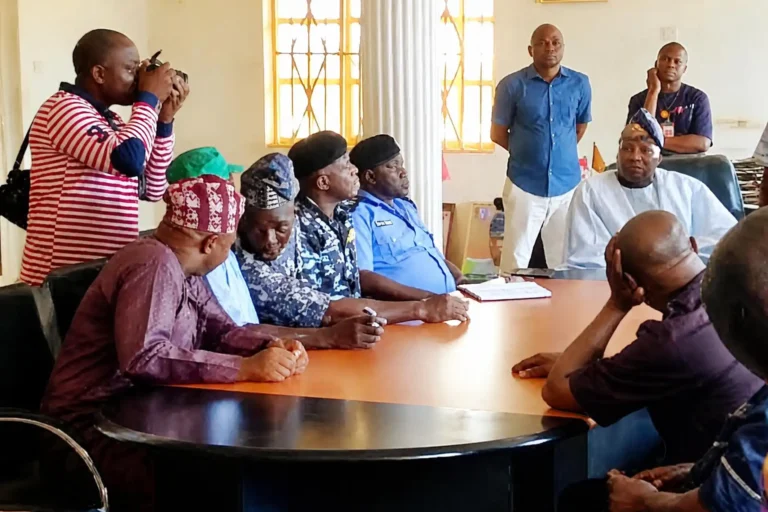
In Ijesaland, this approach took a concrete form on September 7, 2022, when Asiwaju Olayinka Fasuyi, Asiwaju of Ijesaland, convened traditional rulers and other stakeholders at his residence in Ilesa to discuss ways of mobilising resources for the economic empowerment of Ijesa youths.
The meeting produced two significant commitments. Fasuyi pledged ₦12 million towards the proposed Ijesa Youths’ Development Fund, while participating traditional rulers indicated their willingness to make land available within their respective domains for agricultural ventures involving young people.
The initiative reflected a broader vision: to move youth empowerment beyond occasional financial assistance and towards opportunities that could support productive enterprise, self-reliance and community development.
A ₦12 Million Pledge That Was Fulfilled
At the September 7, 2022 meeting, Fasuyi pledged ₦12 million towards the proposed Ijesa Youths’ Development Fund. The fund was conceived as a platform for supporting youth development and encouraging productive economic activities across Ijesaland.
According to his published stewardship account, the entire ₦12 million was paid to the Ijesa Youth Forum (IYF) on October 18, 2022.
The payment converted the pledge into a tangible financial contribution and demonstrated the importance of following through on commitments made in support of community development.
Beyond the monetary value, the contribution provided an example of personal participation in a wider initiative intended to mobilise resources and encourage other stakeholders to support the aspirations of Ijesa youths.
Youth development requires sustained effort from individuals, institutions, traditional authorities and the wider community. A financial contribution can help establish a foundation, but the broader impact depends on how resources are organised and translated into practical opportunities.
Traditional Rulers and the Promise of Agricultural Opportunities
The participation of traditional rulers added another dimension to the initiative.
At the stakeholders’ meeting, the rulers reportedly expressed their willingness to make land available within their respective jurisdictions for agricultural enterprises involving young people.
This commitment complemented the proposed financial support by recognising that access to productive resources can be just as important as access to funding.
Agriculture offers opportunities across cultivation, processing, storage, distribution and other related activities. With suitable land, relevant skills, financing and appropriate support, young people can explore agricultural ventures as a pathway to income generation and enterprise development.
The proposed collaboration therefore sought to bring together three important elements: financial resources, access to land and the participation of young people.
It also highlighted the potential contribution of traditional institutions to community development. Through engagement with local leaders, initiatives can explore opportunities within different communities and encourage collaboration around shared objectives.
The reported willingness to make land available formed part of the initiative’s intended framework. Its long-term value would depend on how such commitments were subsequently organised, implemented and connected to viable agricultural enterprises.
Looking Beyond Immediate Financial Assistance
Fasuyi’s youth-development agenda extended beyond the ₦12 million pledge. A related initiative sought to establish a vocational skills and entrepreneurship development centre for Ijesa youths.
The proposal reflected recognition that sustainable youth empowerment requires more than financial assistance. Young people also need practical skills, relevant training, entrepreneurial knowledge and access to opportunities through which they can apply what they learn.
Vocational development can provide pathways into technical occupations, self-employment and small-business creation. Entrepreneurship education can help young people identify market needs, plan ventures, manage resources and build enterprises capable of generating income and employment.
The proposed centre was intended to bring these objectives together through a more structured approach to skills development and enterprise preparation.
The ₦80 Million Seed Fund
The proposed vocational centre was linked to the completion of the Ijesaland Geriatric Centre, which was commissioned on March 31, 2022.
According to the published project account, a surplus of ₦109,344,878 was recorded following the Centre’s completion. Of this amount, ₦29,344,878 was retained in the project account for the Centre’s subsequent management, while the Ijesa Community Development Assembly (ICDA) earmarked ₦80 million as seed funding for the proposed Ijesa Youth Vocational Skills and Entrepreneurship Development Centre.
Between April 17 and 20, 2022, stakeholders reached a consensus that the Ijesa Development Council (IDC) should undertake the proposed project. ICDA accepted the arrangement, with the expectation that IDC could draw on its wider network to mobilise additional resources and expand the initiative’s reach.
In a statement dated February 27, 2024, Fasuyi reiterated that the ₦80 million remained available for its intended purpose. He reported that the funds, placed in a fixed deposit account, had grown to approximately ₦90.79 million as of February 26, 2024.
He also announced that the Owa Obokun Adimula and Paramount Ruler of Ijesaland, Oba (Dr.) Gabriel Adekunle Aromolaran II, had consented to the use of land opposite the Ijesaland Geriatric Centre for the proposed facility.
These developments provided a financial and prospective location framework for the project. The establishment and eventual operation of the centre, however, would require the necessary planning, implementation, facilities and training arrangements.
The proposal illustrates an effort to connect resources generated through one community development project to a new initiative focused on the skills and economic prospects of the younger generation.
Young People as Leaders of Today
The youth-development agenda also reflects a broader view of leadership and civic participation.
At the inauguration and swearing-in of the third national executive of the Ijesa Youth Forum on October 1, 2025, at the Oba Dr Gabriel Adekunle Aromolaran II Civic Centre, Owa’s Palace, Ilesa, Fasuyi challenged young people to demonstrate their leadership potential through practical action.
The message was that leadership should not be understood only in terms of political office, titles or future aspirations. It can also be demonstrated through creativity, innovation, problem-solving, productivity, sacrifice and contributions that improve society.
This perspective connects with the rationale behind the youth empowerment initiatives.
Agricultural enterprise can encourage productive use of land and other resources. Vocational training can equip participants with practical abilities. Entrepreneurship development can help them turn ideas into viable businesses, while access to funding and partnerships can create pathways for applying their skills.
The wider objective is to encourage young people to become active participants in the development of Ijesaland rather than waiting for opportunities to be provided entirely by others.
Five Lessons in Community Development
The youth empowerment initiative illustrates five principles associated with Fasuyi’s approach to community development.
1. Leadership by example
The ₦12 million pledge, reportedly paid in full on October 18, 2022, demonstrated personal financial participation in the initiative.
2. Vision
The effort connected immediate financial support with a broader ambition to promote agriculture, vocational skills and entrepreneurship.
3. Integrity
The fulfilment of the announced pledge demonstrated consistency between the commitment made and the subsequent contribution, according to the published stewardship account.
4. Collaboration
The stakeholders’ meeting brought traditional rulers and other participants together to consider how financial resources and productive land could support opportunities for young people.
5. Accountability
The payment of the pledged amount provided a concrete record of the commitment being fulfilled. The wider development agenda also highlights the importance of tracking funds, implementation milestones and outcomes as proposed projects progress.
These principles are relevant to community-led development because good intentions must be supported by credible commitments, cooperation and practical delivery.
From Funding to Sustainable Opportunities
The ₦12 million contribution to the Ijesa Youth Forum and the proposed vocational skills and entrepreneurship development centre represent related aspects of a wider youth-development vision.
The first provided a direct financial contribution to the youth initiative. The second sought to establish a longer-term platform for equipping young people with skills and entrepreneurial capacity.
The traditional rulers’ reported willingness to make land available for agricultural ventures added another prospective pathway for productive engagement.
Together, these elements point towards a development approach that recognises several requirements for sustainable youth empowerment: financial resources, access to productive assets, practical skills, entrepreneurship support and cooperation among community institutions.
The ultimate measure of such initiatives will be the opportunities they create and the outcomes they deliver for young people. That includes the implementation of proposed projects, participation in viable enterprises, development of practical competencies and the ability of beneficiaries to build sustainable livelihoods.
Investing in the Future of Ijesaland
The youth empowerment milestone forms part of the record of Asiwaju Olayinka Fasuyi’s engagement with community development in Ijesaland.
The September 2022 stakeholders’ meeting brought together a personal financial commitment and the reported willingness of traditional rulers to support agricultural opportunities for young people. The subsequent vocational centre proposal extended the vision towards structured skills development and entrepreneurship, with ₦80 million earmarked by ICDA as seed funding.
The initiatives reflect an understanding that youth empowerment is not a single event or donation. It requires continued cooperation, practical opportunities and a sustained commitment to helping young people develop their capabilities.
For Ijesaland, the aspiration is to create conditions in which young people can build productive livelihoods, establish enterprises, contribute to their communities and participate meaningfully in the region’s economic development.
The central lesson is that investing in young people means investing in the future of the community. Such investment begins with commitments, but its lasting value is realised when those commitments lead to opportunities, skills and sustainable results.
From the Office of Asiwaju Olayinka Fasuyi