
18 — From Skills to Enterprise: How Asiwaju Olayinka Fasuyi Initiated & Sponsored 200 Ijesa Youths Through IBS-YEDP
Youth empowerment becomes more sustainable when it equips young people not only to seek employment but also to identify opportunities, build businesses, create value and generate jobs for others. In communities where salaried employment opportunities are limited, practical enterprise education can provide an additional pathway towards economic independence.
This conviction underpins the sponsorship of 200 Ijesa youths for the Ibadan Business School Youth Entrepreneurial Development Programme (IBS-YEDP) by Asiwaju Olayinka Fasuyi, the First Asiwaju of Ijesaland and Chairman of the Ijesaland Community Development Assembly (ICDA).
The initiative represents the eighteenth milestone in his decade-long stewardship. It connects a recognised development challenge—the need to strengthen young people’s capacity to establish and manage businesses—with a structured educational intervention intended to help address it.
Identifying the Challenge Before Mobilising Resources
The initiative began with a concern about the economic prospects of young people in Ijesaland. Many young Nigerians aspire to secure salaried employment, yet opportunities are limited. For those willing to pursue entrepreneurship, a lack of practical business knowledge can become another barrier to establishing sustainable livelihoods.
Asiwaju Fasuyi’s response was to support access to structured enterprise education, with the aim of helping young people develop the knowledge and confidence required to turn ideas into viable business ventures.
The approach reflects an important principle of community development: effective interventions should begin with a clear understanding of the problem and a practical assessment of the resources and programmes that can help address it.
Rather than treating youth empowerment solely as the provision of money or short-term assistance, the initiative places emphasis on developing capabilities that beneficiaries can continue to use beyond the period of sponsorship.
The IBS-YEDP Partnership
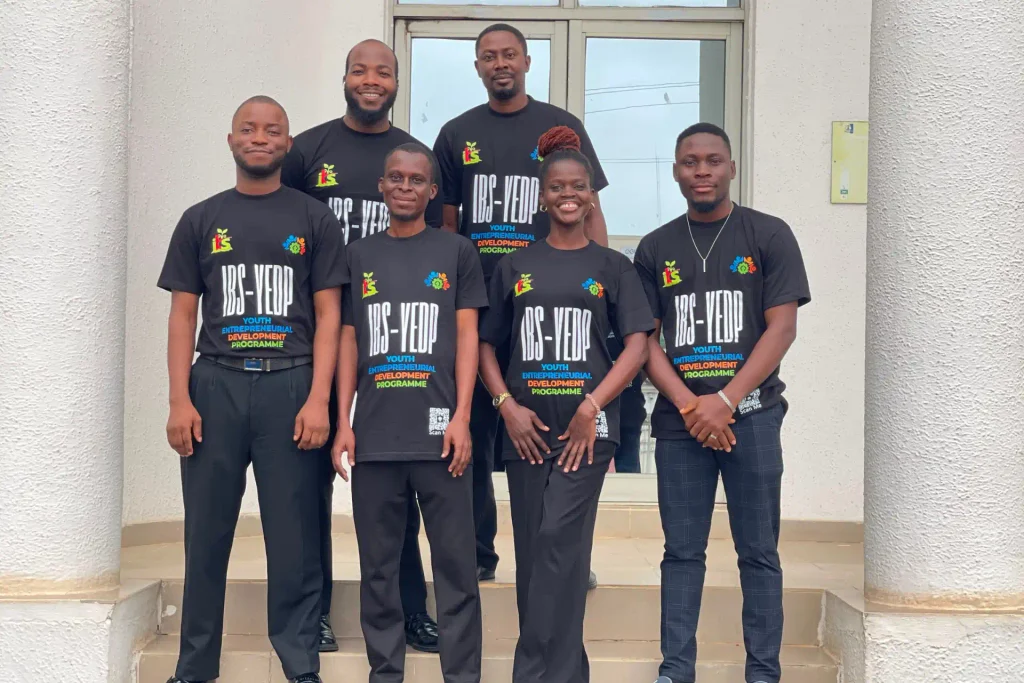
The programme selected for this intervention was the Ibadan Business School Youth Entrepreneurial Development Programme, designed by the School of Enterprise Management at Ibadan Business School.
IBS-YEDP is a six-month, 26-week online enterprise development and business incubation programme for young Nigerians aged 18 to 40. Its online delivery model allows participants to access the programme without the need to relocate to attend physical classes, helping reduce geographical barriers to participation.
The programme is intended to expose participants to entrepreneurship, enterprise development and practical business skills that can support them in establishing, managing and growing businesses.
By sponsoring participation in an established programme, Fasuyi connected his youth-development objective with the educational and business-management expertise available through Ibadan Business School.
The partnership also illustrates the potential contribution of educational institutions and private-sector organisations to youth development. When these institutions work with community leaders and development organisations, they can help extend access to structured learning opportunities to groups that might otherwise face financial barriers.
A ₦10 Million Commitment to 200 Young Ijesas
According to the published milestone account, Asiwaju Fasuyi committed ₦10 million to sponsor 200 Ijesa youths, at ₦50,000 per participant.
The commitment provided a defined financial basis for the intervention and established the scale of participation intended under the sponsorship.
Beneficiaries were drawn from four community networks: the University of Ilesa, the Ijesa Youth Forum, churches and mosques across Ijesaland. This approach brought together young people from educational, civic and religious communities rather than limiting participation to one organisation or social network.
The selection of these channels also reflected the importance of community engagement in identifying beneficiaries and encouraging wider ownership of a youth-development initiative.
The sponsorship was designed to make enterprise education more accessible to these young people while giving them an opportunity to learn from a structured programme.
The distinction is important: the ₦10 million represents the reported sponsorship commitment, while the longer-term economic value will depend on participation, learning, the application of acquired skills and the progress beneficiaries make in developing their enterprises.
From Job Seeking to Value Creation
A central objective of IBS-YEDP is to encourage young people to think beyond the search for conventional employment and consider how they can create value through enterprise.
Entrepreneurship requires more than enthusiasm for a business idea. Prospective business owners need to understand their customers, assess market demand, manage costs, organise operations, make sound financial decisions and adapt when circumstances change.
Structured enterprise education can help learners develop these competencies and approach business ownership with greater preparation.
For the sponsored beneficiaries, the opportunity is to use the programme’s learning experience to evaluate business ideas, understand the requirements of running an enterprise and prepare for the practical realities of the marketplace.
The programme does not guarantee that every participant will establish a successful business. Rather, it provides a learning opportunity intended to improve participants’ readiness to pursue entrepreneurial opportunities.
Its longer-term value will be clearer as beneficiaries apply their knowledge, launch or strengthen ventures, sustain their operations and, where possible, create employment for others.
Making Youth Empowerment a Long-Term Investment
The IBS-YEDP sponsorship complements other youth-focused initiatives associated with Fasuyi and ICDA.
These include agricultural training opportunities through the Leventis partnership, support for agripreneurs, practical ICT training and initiatives intended to improve young people’s access to technical and vocational skills.
Although the programmes operate in different areas, they share a common objective: strengthening the practical capabilities of young people so they can participate more effectively in economic life.
Agricultural training can help participants develop productive farming and agribusiness ventures. ICT training can provide technical skills relevant to repair, maintenance and other technology-related services. Enterprise education can help young people understand how to organise, manage and grow businesses across different sectors.
Together, these approaches demonstrate the value of combining technical knowledge with business skills. A young person may possess a useful technical ability, but understanding customers, pricing, financial management and business planning can be equally important to turning that ability into a sustainable livelihood.
The IBS-YEDP sponsorship therefore forms part of a broader effort to connect skills development with enterprise capacity and economic participation.
Leadership, Accountability and Measurable Results
The initiative also highlights the importance of linking leadership commitments to clearly defined inputs and intended outcomes.
The published account identifies three measurable elements: a reported ₦10 million sponsorship, 200 intended beneficiaries and a 26-week programme. These figures provide a useful starting point for tracking implementation.
However, the ultimate assessment of the intervention should go beyond the amount committed or the number of participants enrolled. It should also consider whether beneficiaries complete the programme, acquire useful skills and apply their learning in practical ways.
Relevant indicators could include programme completion rates, the number of business plans developed, ventures established or strengthened, business survival over time, additional income generated and jobs created.
Such measures would help distinguish participation in training from longer-term economic outcomes. They could also provide valuable lessons for future sponsorships and youth-enterprise initiatives.
Accountability is particularly important when a programme is presented as a community-development investment. Clear records of sponsorship, beneficiary participation and follow-up outcomes can help stakeholders understand what has been achieved and where further support may be needed.
A Public Case for Youth Leadership
Fasuyi has also made a broader public case for recognising young Nigerians as contributors to development today, rather than treating leadership as a responsibility reserved for the future.
At the inauguration of the third National Executive of the Ijesa Youth Forum on 1 October 2025, he challenged young people to take practical responsibility and demonstrate their capacity for leadership.
In an article published on 5 July 2026, titled Nigeria Youths: Leaders of Today and Not Tomorrow!, he further advocated stronger investment in entrepreneurial development and practical skills, including collaboration among government, educational institutions and the private sector.
The IBS-YEDP sponsorship provides a practical expression of that position: it directs resources towards a structured learning opportunity for young people who may use the experience to pursue business and enterprise opportunities.
The next step is to sustain that commitment through learning, application and the careful assessment of results.
Investing in the Economic Future of Ijesaland
The sponsorship of 200 Ijesa youths through IBS-YEDP reflects a development approach that places knowledge and capacity building alongside financial support.
By committing a reported ₦10 million to the initiative, Asiwaju Olayinka Fasuyi sought to expand access to enterprise education and help young people prepare for the challenges of business ownership.
The programme brings together the resources of a community leader, the educational expertise of Ibadan Business School and the participation of young people drawn from different networks across Ijesaland.
Its lasting significance will depend on what participants do with the opportunity: the businesses they establish, the enterprises they improve, the livelihoods they build and the value they create for their communities.
Ultimately, investing in young people means more than helping them prepare for available opportunities. It also means equipping them with the knowledge and practical capabilities to identify opportunities, solve problems and create new ones.
Through the IBS-YEDP sponsorship, the aim is to help more young Ijesas move from aspiration to informed action—and from seeking opportunities to building sustainable enterprises of their own.