03 — From Darkness to Light: How Asiwaju Olayinka Fasuyi Helped Restore Electricity to Ijesaland
A Defining Moment in Community Leadership, Negotiation and Collective Action
On 18 March 2019, Ijesaland faced an electricity crisis that threatened to disrupt its economic activities, essential services and everyday life. Following a violent confrontation involving some youths in Ilesa and officials of the Ibadan Electricity Distribution Company (IBEDC), electricity infrastructure was damaged, and the six Local Government Areas of Ijesaland were disconnected from the national grid.
The consequences were immediate and far-reaching. Businesses faced disruption, essential services came under pressure, and residents confronted the prospect of an extended period without electricity. Reports at the time indicated that the disruption could last for years.
At this critical moment, Asiwaju Olayinka Fasuyi, Asiwaju of Ijesaland, took the initiative to engage the parties involved and pursue a peaceful resolution.
Rather than allowing anger and confrontation to define the course of events, he embarked on a sustained process of dialogue, negotiation and stakeholder mobilisation aimed at restoring electricity and protecting the social and economic interests of Ijesaland.
Within approximately three months, electricity was restored to Ijesaland. The community also avoided the reported financial penalty associated with the damaged infrastructure.
The episode became an important example of leadership in action: identifying a critical problem, bringing the relevant parties together, pursuing practical solutions and following through until the desired outcome was achieved.
The Crisis That Brought Ijesaland to a Standstill
The events of March 2019 presented Ijesaland with a challenge that extended beyond the immediate dispute between residents and the electricity distribution company.
Electricity is fundamental to modern economic and social life. Businesses depend on it to operate efficiently, healthcare facilities require reliable power for essential services, schools need conducive learning environments, and households rely on electricity for daily activities.
For Ijesaland, the disconnection of the six Local Government Areas represented a serious threat to community wellbeing and economic productivity.
The damaged infrastructure complicated an already difficult situation. Restoring supply required more than a public appeal or a temporary intervention. It required communication between the community and IBEDC, attention to the damaged facilities, engagement with security authorities and the involvement of government and traditional institutions.
The challenge was therefore to move the situation away from confrontation and towards a solution that would restore electricity without imposing an unsustainable burden on the community.
Taking the Initiative: Leadership at a Critical Moment
Asiwaju Olayinka Fasuyi recognised that the situation required immediate engagement and a coordinated response.
On 18 March 2019, he travelled to IBEDC’s headquarters in Ibadan for an extended meeting with the company’s management concerning the crisis and the restoration of electricity to Ijesaland.
This engagement marked the beginning of a sustained effort to bring the parties together around a practical resolution.
He subsequently engaged traditional rulers, community representatives, security authorities, government officials and other relevant stakeholders. The objective was to establish communication, understand the issues involved and create the conditions necessary for the restoration process to proceed.
The approach reflected a defining characteristic of his community leadership: the willingness to step into a difficult situation, take responsibility for pursuing a solution and mobilise the people and institutions whose cooperation would be required.
The intervention was not simply about demanding the return of electricity. It was about creating a viable pathway towards restoration.
Choosing Dialogue Over Prolonged Confrontation
At a time when frustration and anger were understandable, the need for a peaceful and constructive response was particularly important.
Asiwaju consistently appealed for calm and encouraged aggrieved residents, particularly the youths, to allow negotiations to proceed.
His position was guided by a practical consideration: prolonged confrontation could deepen the economic and social consequences of the crisis without necessarily resolving the underlying issues.
The objective was to protect the interests of Ijesaland while maintaining the possibility of constructive engagement with IBEDC.
This required balancing firmness with restraint—defending the community’s interests while recognising that a lasting resolution would depend on communication, cooperation and action by the relevant parties.
The approach demonstrated that community advocacy need not be driven by confrontation alone. Where circumstances permit, disciplined negotiation and sustained engagement can provide a more productive route to resolving disputes.
Three Months of Negotiation and Stakeholder Engagement
The restoration process required persistence.
Over approximately three months, Asiwaju remained actively involved in negotiations and stakeholder engagements intended to rebuild confidence between IBEDC and the Ijesaland community.
The process involved several interconnected responsibilities:
- Engaging IBEDC: Maintaining communication with the company’s management and pursuing a practical route to the restoration of electricity.
- Mobilising traditional institutions: Engaging traditional rulers and community leaders to support dialogue and coordinated action.
- Maintaining peace: Encouraging residents and youths to avoid actions that could further complicate the situation.
- Engaging government: Seeking the involvement of the Osun State Government when a broader intervention became necessary.
- Communicating developments: Keeping stakeholders informed of progress, challenges and the next steps in the resolution process.
These efforts underscored the importance of sustained engagement. A complex community-wide problem rarely yields to a single meeting or isolated intervention. Progress depends on maintaining communication, addressing concerns and following through on agreed actions.

Bringing Government, Community and IBEDC to the Table
As negotiations progressed, it became clear that broader government involvement would be important to achieving a resolution.
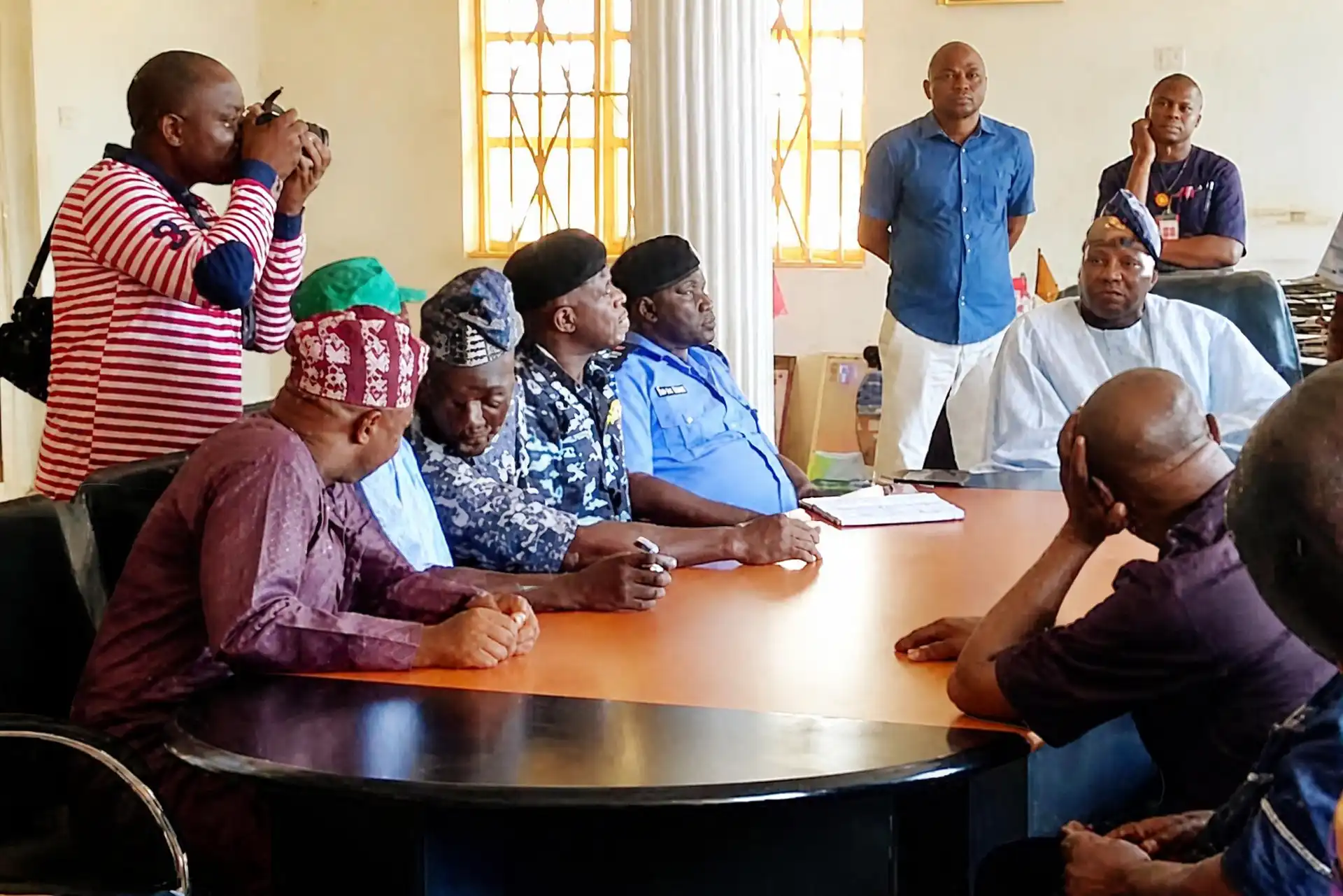
Asiwaju therefore wrote to the then Governor of Osun State, Adegboyega Oyetola, requesting a tripartite meeting involving the Osun State Government, representatives of Ijesaland and IBEDC.
The meeting was held at the Governor’s office on 10 April 2019.
It provided a platform for the parties to engage at a higher level and discuss the way forward. IBEDC committed to initiating the processes required for the repair and restoration of electricity.
The significance of this engagement lay in the coordination it created among parties whose cooperation was essential to resolving the crisis.
The intervention demonstrated the value of connecting community concerns with the relevant government institutions and service providers, rather than treating the problem as the responsibility of only one party.
It also illustrated the importance of knowing when to broaden negotiations and bring additional stakeholders into the process.
Protecting the Community from a Major Financial Burden
One of the difficult issues surrounding the crisis was the reported financial demand associated with the damaged electricity infrastructure.
The contemporary account placed the demand at approximately ₦242 million, a sum that would have represented a substantial burden for the community.
Through continued negotiations and stakeholder engagement, the process ultimately concluded without Ijesaland bearing the reported financial penalty.
This outcome formed an important part of the resolution because the restoration of electricity was not the only concern. The financial implications of the dispute also had to be addressed in a manner that protected the community’s broader interests.
The episode illustrates the importance of negotiation in situations where infrastructure damage, service disruption and financial liabilities intersect.
A successful resolution must consider not only how services can be restored, but also how the parties involved can move forward without creating additional hardship.
Transparency: Keeping Stakeholders Informed
Throughout the process, communication remained an important component of the intervention.
Asiwaju established a reporting network through which updates from his engagements with IBEDC and other stakeholders were communicated to Ijesa organisations and individuals.
This helped stakeholders follow developments, understand the challenges being addressed and appreciate the steps being taken towards a resolution.
The principle behind this approach was expressed in the words recorded in the account of the intervention:
“Information is power only when it’s disseminated in timely manner.”
The emphasis was on timely communication as a means of strengthening confidence and enabling informed participation.
In a tense situation, a lack of reliable information can deepen uncertainty, fuel suspicion and make cooperation more difficult. Regular updates, by contrast, help stakeholders understand the process and remain engaged with the search for a solution.
The experience reinforced the importance of transparency in community leadership—not merely as a matter of reporting decisions, but as a practical means of sustaining trust during difficult negotiations.
Accountability: Following Through Until Electricity Returned
The intervention did not end when meetings were held or commitments were made.
Asiwaju continued to monitor developments, communicate progress and engage stakeholders as the restoration process advanced.
This follow-through was essential because commitments made during negotiations had to translate into practical action.
The eventual restoration of electricity within approximately three months marked the outcome of a process involving community mobilisation, government engagement, negotiations with IBEDC and contributions from traditional rulers, community organisations and other stakeholders.
The account of the intervention identifies Asiwaju as a principal driver of the negotiation process while acknowledging that the restoration was achieved through combined efforts.
That distinction is important. Community leadership often involves creating the conditions for multiple institutions and individuals to work towards a shared outcome. Its value lies not only in initiating action, but also in sustaining cooperation until tangible progress is achieved.
From Darkness to Light: The Outcome for Ijesaland
The restoration of electricity brought relief to residents and businesses across Ijesaland after a period of uncertainty.
It represented more than the return of a basic utility. It helped avert the prospect of a prolonged disruption to economic activity and essential services, while demonstrating that a difficult dispute could be addressed through sustained engagement.
The episode also offered wider lessons about the relationship between infrastructure, community wellbeing and effective leadership.
Reliable electricity supports commercial activity, improves the operating environment for institutions and contributes to the everyday functioning of communities. Protecting access to essential infrastructure is therefore an important part of safeguarding economic opportunity and social welfare.
For Ijesaland, the resolution of the 2019 crisis stands as a significant example of how stakeholder cooperation can help address a challenge with consequences for an entire community.
Five Leadership Principles in Action
The electricity restoration effort reflects five principles associated with Asiwaju Olayinka Fasuyi’s approach to community development.
1. Leadership by Example
When the crisis emerged, he personally engaged the parties involved and took an active role in pursuing a resolution.
2. Vision
The focus remained on the desired outcome: restoring electricity and protecting the social and economic life of Ijesaland, rather than allowing the dispute to become an enduring source of confrontation.
3. Integrity
The process sought to protect community interests while maintaining channels of communication and pursuing a peaceful resolution.
4. Transparency
The communication network established during the negotiations helped keep stakeholders informed about developments and the way forward.
5. Accountability
The intervention involved continued engagement and follow-up beyond the initial meetings, with attention directed towards achieving the practical outcome of electricity restoration.
Together, these principles illustrate an approach to leadership that combines initiative with collaboration and advocacy with sustained implementation.
A Lasting Lesson in Community Problem-Solving
The 2019 electricity crisis remains an important chapter in the documentation of Asiwaju Olayinka Fasuyi’s service to Ijesaland.
It demonstrated the value of timely intervention, peaceful negotiation, stakeholder mobilisation and persistence in the face of a complex community-wide challenge.
It also highlighted the importance of recognising that significant development outcomes are rarely achieved by one person or institution acting alone. They require cooperation among those who possess the authority, resources, technical capacity and community trust needed to address the problem.
The restoration of electricity was the immediate outcome. The broader lesson was the value of bringing people and institutions together around a clearly defined objective and maintaining the effort until progress was achieved.
Asiwaju’s approach to development has often been summarised through a practical sequence: identify the problem, proffer the solution, mobilise the stakeholders, develop the implementation and pursue the execution.
The electricity restoration effort provided a clear illustration of that philosophy in practice.
The Journey Continues
Milestone 03 forms part of the continuing record of a decade of service, impact and development advocacy in Ijesaland.
The story of the 2019 electricity crisis is ultimately a story of a community confronting a serious challenge and pursuing a solution through dialogue, negotiation and collective action.
It is a reminder that leadership is most meaningful when it helps turn uncertainty into direction, conflict into constructive engagement and shared challenges into opportunities for practical solutions.
A decade of service. A commitment to collective action. A determination to build a stronger Ijesaland.