
05 — From Empowerment to Emergency Relief: Asiwaju Olayinka Fasuyi’s Grassroots Interventions Across Ijesaland
Investing in Livelihoods, Supporting Families and Mobilising Ijesa Solidarity in Times of Need
Leadership is often most clearly demonstrated at the grassroots, where the needs of individuals, families and communities demand practical responses. It is reflected in the ability to recognise a challenge, act with compassion, invest in people’s potential and bring others together when a problem requires collective effort.
Across his decade of service in Ijesaland, Asiwaju Olayinka Fasuyi has been associated with interventions that reflect these different dimensions of community leadership. From agricultural entrepreneurship and skills acquisition to COVID-19 relief and support for a community devastated by a rainstorm, these initiatives addressed needs that differed in urgency and scale but shared a common objective: improving lives and strengthening the resilience of Ijesa communities.
Three milestones stand out in this aspect of his service record. Together, they illustrate how personal commitment can be combined with community participation to address immediate hardship while supporting longer-term development.
1. Agropreneurship: Building Skills for Sustainable Livelihoods
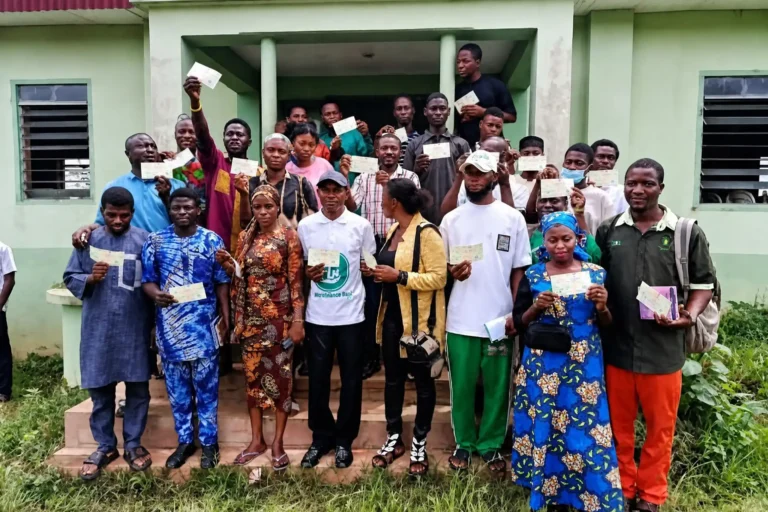
In 2020, Asiwaju Olayinka Fasuyi sponsored an agropreneurship and skills acquisition programme for 300 participants drawn from the six Local Government Areas of Ijesaland, in collaboration with the One Community, One Industry Initiative.
The programme was designed to encourage participants to see agriculture not merely as subsistence activity, but as a viable enterprise capable of generating income, creating employment and contributing to local economic development.
This distinction is important. While immediate financial assistance can provide temporary relief, relevant skills and enterprise knowledge can help individuals build more sustainable sources of livelihood. By introducing participants to the business potential of agriculture, the programme sought to encourage a more entrepreneurial approach to food production and related economic activities.
The initiative also reflected the importance of investing in people. Participants drawn from different parts of Ijesaland were given an opportunity to develop knowledge and skills that could support their economic prospects and potentially benefit their households and communities.
Fasuyi personally sponsored the programme, demonstrating a willingness to commit resources to human capacity development. Its broader significance lay in the recognition that community advancement depends not only on infrastructure and financial contributions, but also on equipping people with the capacity to create opportunities for themselves.
The lesson is enduring: empowering people with productive skills can help strengthen household livelihoods and contribute to a more resilient local economy.
2. COVID-19 Relief: Responding to Immediate Human Needs
The COVID-19 pandemic brought extraordinary disruption to livelihoods, movement and everyday economic activity. For many households, the restrictions and uncertainty of 2020 created additional pressure around food and other basic necessities.
In response to the hardship experienced within his immediate community, Asiwaju Fasuyi personally provided food and other essential relief items to 350 residents of Adebayo Abon/Farinloye Quarters in Ilesa.
The intervention addressed immediate needs at a time when many families were facing uncertainty. It also illustrated the value of identifying specific communities in need and responding in a direct, practical manner.
Beyond his personal contribution, Fasuyi mobilised Ijesa sons and daughters to participate in the wider humanitarian response to the pandemic. This broader effort reflected a complementary dimension of grassroots leadership: while an individual can provide direct assistance, mobilisation can extend the reach of a response by encouraging others to contribute.
The distinction matters. The relief personally provided to residents of Adebayo Abon/Farinloye Quarters was a direct intervention, while the wider response depended on the collective willingness of members of the Ijesa community to support people facing hardship.
Together, these efforts reflected two important principles—compassion in responding to immediate needs and solidarity in addressing a challenge affecting society more broadly.
3. Ilare-Ijesa: Mobilising a Community After Disaster
On Friday, 27 January 2023, a violent rainstorm struck Ilare-Ijesa in Osun State, causing extensive damage to buildings and community property.
According to the published account of the incident, the storm lasted approximately 25 minutes and damaged at least 100 houses, along with churches, shops, residential buildings and the community police station. One of the most significant losses was the collapse of the Ilare-Ijesa Community Civic Centre, a major self-help project undertaken by indigenes through the Ilare Development Association.
Some families were left homeless. Although no lives were reportedly lost, the scale of the destruction created an urgent need for assistance and recovery.
The Owalare of Ilare-Ijesa, Oba Adejoro Otebolaku, appealed for support. The appeal brought the plight of the community to wider public attention and created an opportunity for Ijesas across different communities to respond.
From Sympathy to Practical Action
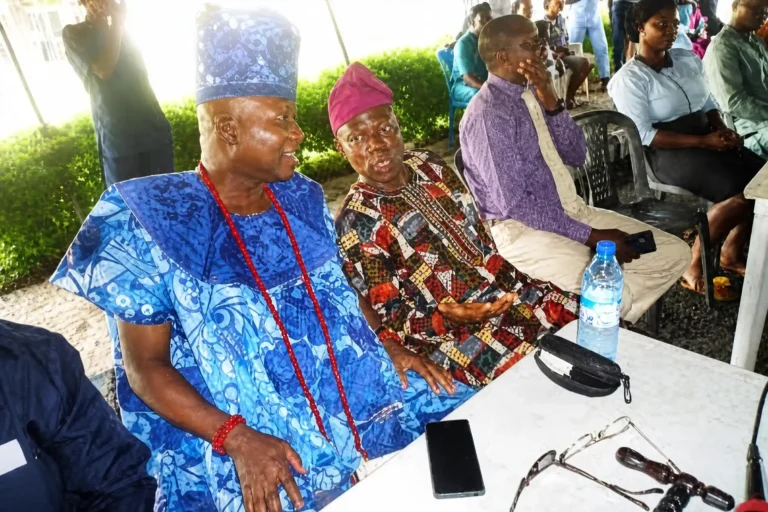
On Sunday, 5 February 2023, Asiwaju Fasuyi led a delegation to Ilare-Ijesa to express sympathy and assess the damage, particularly the destruction of the Civic Centre.
The delegation included Chief Afolabi Igbaroola, Mr Wale Idowu and Prince Seyi Lufadeju. During the visit, Fasuyi conveyed the sympathy of the late Owa Obokun Adimula, Oba Dr Gabriel Adekunle Aromolaran II, and the wider Ijesa nation.
The visit was significant because it went beyond the expression of condolences. It provided an opportunity to understand the scale of the damage firsthand and consider how the wider Ijesa community could contribute to recovery.
Fasuyi subsequently initiated the Ilare-Ijesa Support Fund through the Ijesa Communities Development Assembly (ICDA), appealing to traditional rulers, Ijesa individuals and groups, community associations, clubs and other well-wishers to support the reconstruction effort.
This approach recognised that the destruction of a major community asset could not reasonably be addressed through individual goodwill alone. A coordinated response was needed to bring together resources from different parts of Ijesaland.
Turning Ijesa Solidarity into Measurable Support
The mobilisation produced a substantial response. Within three weeks, contributions exceeding ₦16.6 million had reportedly been raised for the reconstruction of the damaged Community Civic Centre.
The significance of the initiative extended beyond the amount collected. It demonstrated how a community’s collective identity could be translated into practical assistance when one of its constituent communities faced adversity.
The fund was directed towards a clearly identified purpose: rebuilding the Civic Centre. This specific objective helped distinguish the initiative from a general appeal for relief and gave contributors a defined recovery goal around which to organise their support.
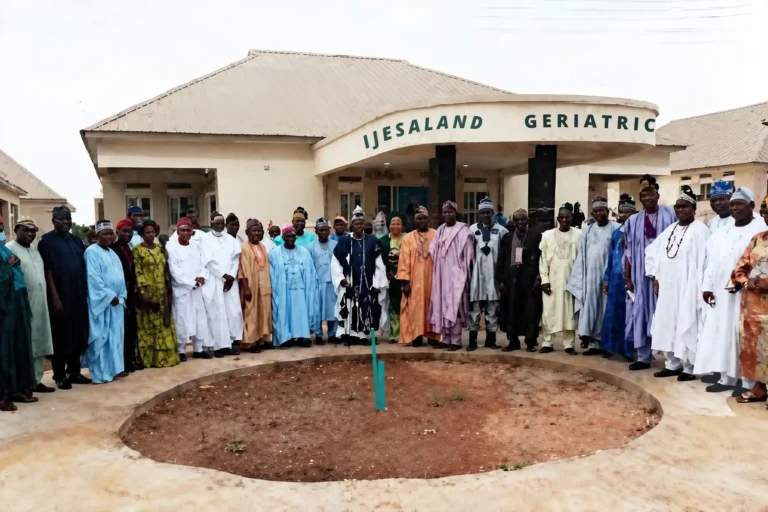
The contributions were documented and acknowledged, and the funds were formally presented at the Palace of the Owa Obokun Adimula in the presence of the paramount ruler, traditional rulers, community leaders and representatives of Ilare-Ijesa.
The public presentation provided visibility for the intervention and recognised the role of the individuals and groups who contributed to the collective effort.
A Practical Expression of One Ijesaland
At the presentation, Fasuyi expressed the principle behind the intervention in words that captured the broader significance of Ijesa solidarity:
“Though we may be geographically classified as Ijesa Central, Ijesa North and Ijesa South, the blood in our vein is that of Ijesa.”
The message was clear: geographical divisions and administrative boundaries should not prevent Ijesas from supporting one another in times of need.
The Ilare-Ijesa intervention demonstrated how this principle could be translated into action. A local disaster became an opportunity for people across Ijesaland to contribute to a shared recovery effort, reaffirming the value of cooperation across communities.
It also reinforced the importance of following an intervention through its various stages—from identifying the problem and assessing the damage to mobilising contributors, defining the purpose of the fund and presenting the resources raised for the intended reconstruction.
Three Interventions, One Approach to Community Development
Although the agropreneurship programme, COVID-19 relief and Ilare-Ijesa Support Fund addressed different circumstances, they reveal complementary dimensions of grassroots development.
Economic empowerment: The agropreneurship programme invested in productive skills and the potential for sustainable livelihoods.
Humanitarian response: The COVID-19 intervention provided direct assistance to residents experiencing hardship while encouraging wider community participation in the pandemic response.
Community resilience: The Ilare-Ijesa initiative mobilised resources across Ijesaland to support the recovery of a community asset damaged by a natural disaster.
These interventions demonstrate why community development must be understood as more than the delivery of physical projects. It also involves strengthening people’s capabilities, responding to vulnerability and helping communities recover when unexpected events threaten their wellbeing.
They further illustrate the relationship between personal commitment and collective responsibility. Direct assistance can make an immediate difference, while organised mobilisation can extend the reach of an intervention and make it possible to address challenges that exceed the capacity of any one individual.
Five Principles Reflected in Grassroots Service
The three milestones also connect with five principles associated with Asiwaju Olayinka Fasuyi’s decade of service.
Leadership by example was reflected in his personal sponsorship of the agropreneurship programme, direct provision of COVID-19 relief and visit to storm-affected Ilare-Ijesa.
Vision was demonstrated through investment in productive skills and the recognition that agriculture could serve as a pathway to enterprise and livelihood development.
Integrity was reflected in the focus on defined community needs and the stated purpose of the Ilare-Ijesa Support Fund.
Transparency was supported by the documentation and public acknowledgement of contributions to the Ilare-Ijesa initiative.
Accountability was reflected in the effort to connect the mobilisation of resources with an identified reconstruction objective and a formal presentation of the funds.
These principles are most useful when they move beyond statements of intention and inform the way community initiatives are organised, implemented and communicated.
Strengthening Communities Through Service and Solidarity
The story of these grassroots interventions is ultimately a story about responding to people and their circumstances.
In 2020, the focus included equipping 300 participants with agropreneurship and skills acquisition opportunities and providing relief to 350 residents during the COVID-19 crisis. In 2023, the emphasis shifted to mobilising the wider Ijesa community after a rainstorm devastated Ilare-Ijesa and destroyed its Civic Centre.
Each intervention addressed a different need, but all three reflected the importance of identifying practical problems, committing resources and encouraging participation.
The achievements should also be understood in their collective context. Community development depends on the contributions of beneficiaries, volunteers, donors, traditional institutions, professional groups and community organisations. Leadership can help unite these efforts, but lasting outcomes require the participation and commitment of many people.
Asiwaju Olayinka Fasuyi’s grassroots interventions form part of a wider record of service spanning education, healthcare, agriculture, infrastructure, youth empowerment and community development.
Together, they offer a reminder that meaningful service can take many forms: investing in a person’s future, helping a household through a difficult period or rallying an entire community to rebuild after disaster.
For Ijesaland, the enduring lesson is that progress is strengthened when compassion is matched with action, empowerment is treated as an investment and unity becomes a practical resource for solving shared problems.