15 — From Dependence to Collective Ownership: How Asiwaju Olayinka Fasuyi Conceived the Ijesaland Development Fund
A community-owned development financing model designed to mobilise Ijesa people at home and in the diaspora, empower all 64 wards and make grassroots development a shared responsibility.
Sustainable development requires more than good ideas. It requires reliable funding, inclusive participation, sound planning and institutions capable of translating community priorities into measurable results.
For many communities, one persistent challenge is dependence on government interventions, occasional fundraising appeals and a relatively small group of generous individuals. While these sources of support can deliver important projects, they may not provide a predictable, inclusive and sustainable framework for addressing development needs across an entire region.
It was against this background that Asiwaju Olayinka Fasuyi, the Asiwaju of Ijesaland, conceived the Ijesaland Development Fund (IDF), an initiative designed to create a structured, community-owned financing mechanism for development across Ijesaland’s six local government areas.
The central idea was simple but far-reaching: the sustainable development of Ijesaland should be the responsibility of all Ijesa people, regardless of where they live or how much they can contribute.
Through the Ijesa Community Development Assembly (ICDA), Fasuyi helped advance this vision from conception to mobilisation, funding, grassroots capacity-building and the development of structures intended to support implementation.
The IDF represents a significant milestone because it seeks not merely to raise money for individual projects, but to establish a continuing system through which communities can identify their needs, set priorities and participate in their own development.
The challenge: Expanding participation in community development
Ijesaland has a long history of community-driven development, supported by the contributions of individuals, families, professional groups, traditional institutions and community associations.
These efforts have produced valuable initiatives. However, the funding model for community development has often depended on a relatively limited number of contributors, especially when projects require substantial financial resources.
The published account of the IDF’s conception cited approximately 615 contributors from an estimated Ijesaland population of 1,299,390 as an illustration of the gap between the region’s potential contribution base and the number of people actively participating in previous development efforts.
For Fasuyi, this presented both a challenge and an opportunity.
Rather than continue to rely principally on a small pool of donors, he envisioned a model that could widen participation and give more Ijesa people a practical means of contributing to development.
The objective was to establish a system in which people could participate according to their means, while the collective resources would be directed towards projects identified through community-level assessment.
Under this approach, development financing would become a shared responsibility rather than an occasional appeal to a few prominent individuals.
The Fund was designed to cover the six local government areas of Ijesaland: Ilesa East, Ilesa West, Obokun, Oriade, Atakumosa East and Atakumosa West, with the needs of communities and wards informing development priorities.
Conceiving a community-owned development fund
The Ijesaland Development Fund emerged from Fasuyi’s conviction that lasting development requires an organised funding mechanism capable of bringing together the financial strength and goodwill of Ijesa people at home and abroad.
The concept was intended to address three interconnected needs.
First, Ijesaland needed a broader participation base so that development would not depend on the same limited circle of contributors.
Second, the region needed a more structured way to connect available resources with projects that reflected actual community needs.
Third, it needed institutional arrangements that could support responsible management, transparency and accountability in the use of contributed funds.
The IDF was therefore conceived as more than a fundraising campaign. It was intended to provide a continuing framework for mobilising resources, empowering communities to identify development priorities and financing approved initiatives.
Its guiding philosophy was that every Ijesa should have an opportunity to participate in the development of the land, irrespective of financial capacity or geographical location.
The model also sought to strengthen the connection between community contributions and local priorities. Rather than allowing development decisions to be determined solely by a central group, the framework placed importance on grassroots participation and the needs identified by the people who would benefit from the projects.
This approach provided the foundation for the Fund’s ward-based structure.
From conception to formal launch
Having developed the concept, Fasuyi mobilised support through ICDA, engaging traditional institutions, community leaders, professionals, private-sector contributors and other stakeholders.
The Ijesaland Development Fund was formally launched on 21 October 2025, with the participation and royal endorsement of the Owa Obokun Adimula of Ijesaland, His Imperial Majesty Oba Clement Adesuyi Haastrup, Ajimoko III.
The royal endorsement provided important traditional support for an initiative intended to serve communities across Ijesaland.
The launch marked a transition from the original idea to a structured funding mechanism through which Ijesa people and other supporters could contribute to grassroots development.
The stated minimum annual contribution was ₦1,000, allowing people to participate according to their means, while larger contributions remained open-ended.
This flexible contribution model was intended to widen access and reinforce the principle that community development should not be restricted to people who can make substantial financial donations.
According to the launch report, the Fund recorded total receipts of ₦115,990,000 at its initial unveiling. The reported allocation was ₦19,331,667 for each of the six local government areas.
The launch therefore provided an early financial foundation for the Fund and demonstrated that a community-owned development mechanism could attract substantial support.
These figures represent the reported position at the initial launch; the Fund’s subsequent financial performance and project expenditure should be assessed through its ongoing financial reports.
Leadership by example
Fasuyi’s contribution to the IDF extended beyond conceiving the model and mobilising stakeholders.
During the Fund’s capacity-building engagements in February 2026, he was listed among six recognised IDF Ambassadors who had contributed ₦1 million to each of the six local government areas, amounting to ₦6 million.
The other recognised contributors were Owa Clement Adesuyi Haastrup, Supo Shadiya, Sir Olalekan Oyeleye, Dr Ademola Aladekomo and Dame Erelu Olusola Obada.
Their contributions strengthened the Fund’s financial base and demonstrated the importance of visible commitment from community leaders and other prominent contributors.
Fasuyi’s participation was consistent with the principle that those advocating collective responsibility should also be willing to contribute to the shared objective.
At the same time, the IDF’s long-term viability depends on broad participation beyond its founding advocates and major contributors. Its community-owned character will ultimately be reflected in the extent to which people across Ijesaland take part, trust the institution and see tangible benefits from the resources mobilised.
Empowering all 64 wards to identify their priorities
A development fund can raise substantial resources and still fall short of its purpose if the projects it supports do not address genuine community needs.
For this reason, the IDF’s design placed considerable emphasis on grassroots planning and the ability of ward-level stakeholders to identify, assess and prioritise development projects.
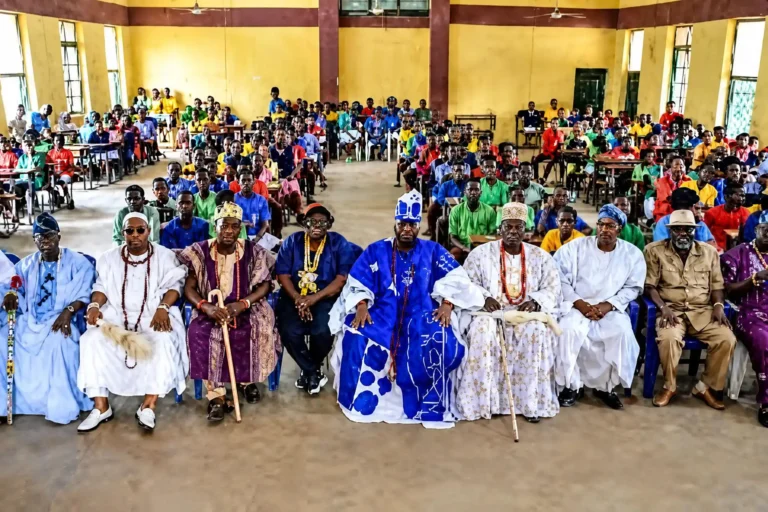
Following a resolution of the ICDA Board of Trustees in January 2026, a weeklong capacity-building programme was organised under the theme Community Needs Identification and Appraisal for the Ijesa Development Fund (IDF).
The programme commenced on 9 February 2026 at Ibokun Town Hall in Obokun Local Government Area. It continued through Iperindo in Atakumosa East, Ijebu-Jesa in Oriade and Osu in Atakumosa West before concluding in Ilesa for participants from Ilesa East and Ilesa West.
Fasuyi led the ICDA management team throughout the engagements and explained that the IDF was intended to empower wards to identify and prioritise their own development needs.
Development expert Professor Niyi Okunlola, a professor at the Federal University of Technology, Akure, and a World Bank consultant, delivered training on needs identification and assessment.
Participants were introduced to practical tools, including structured checklists and ranking and scoring matrices, to help communities document needs and determine which projects should receive priority.
The training emphasised participation, inclusiveness, objectivity, transparency, cultural sensitivity and sustainability.
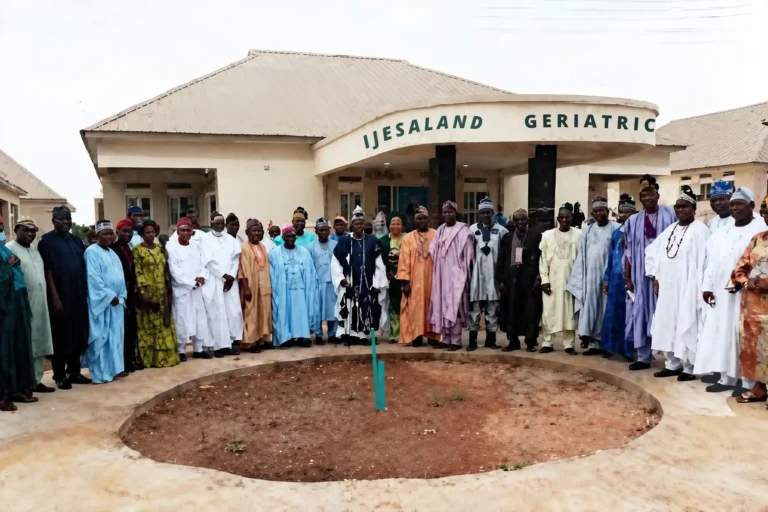
Traditional rulers, community leaders, ward executives and other stakeholders participated in the engagements. Their involvement was intended to ensure that the process reflected local realities and encouraged communities to take ownership of their development priorities.
The capacity-building programme represented an important step towards connecting the Fund’s financial resources with a more systematic approach to selecting projects.

From funding to implementation
The IDF’s ambition extends beyond collecting contributions and distributing funds. Its framework seeks to establish a process through which community needs are identified, projects are assessed, priorities are determined and approved initiatives can be financed.
This sequence is important because responsible development requires a connection between available money and clearly defined outcomes.
A community may need a better road, a functioning healthcare facility, improved water supply or an intervention to support local livelihoods. Each proposal must be assessed against its urgency, expected benefits, feasibility, cost and sustainability.
The IDF’s capacity-building approach was designed to equip grassroots leaders with the tools to participate in this process more effectively.
By strengthening ward-level planning, the Fund seeks to reduce the risk of project selection being driven only by personal preferences or assumptions about what communities need.
The long-term objective is to establish a development process in which community priorities inform decisions and resources can be directed towards initiatives with a clear purpose and prospect of lasting benefit.
The extent to which this objective is achieved will depend on the consistent application of the framework, the quality of project assessments and transparent reporting on the use of funds.
A complementary initiative for cooperative enterprise
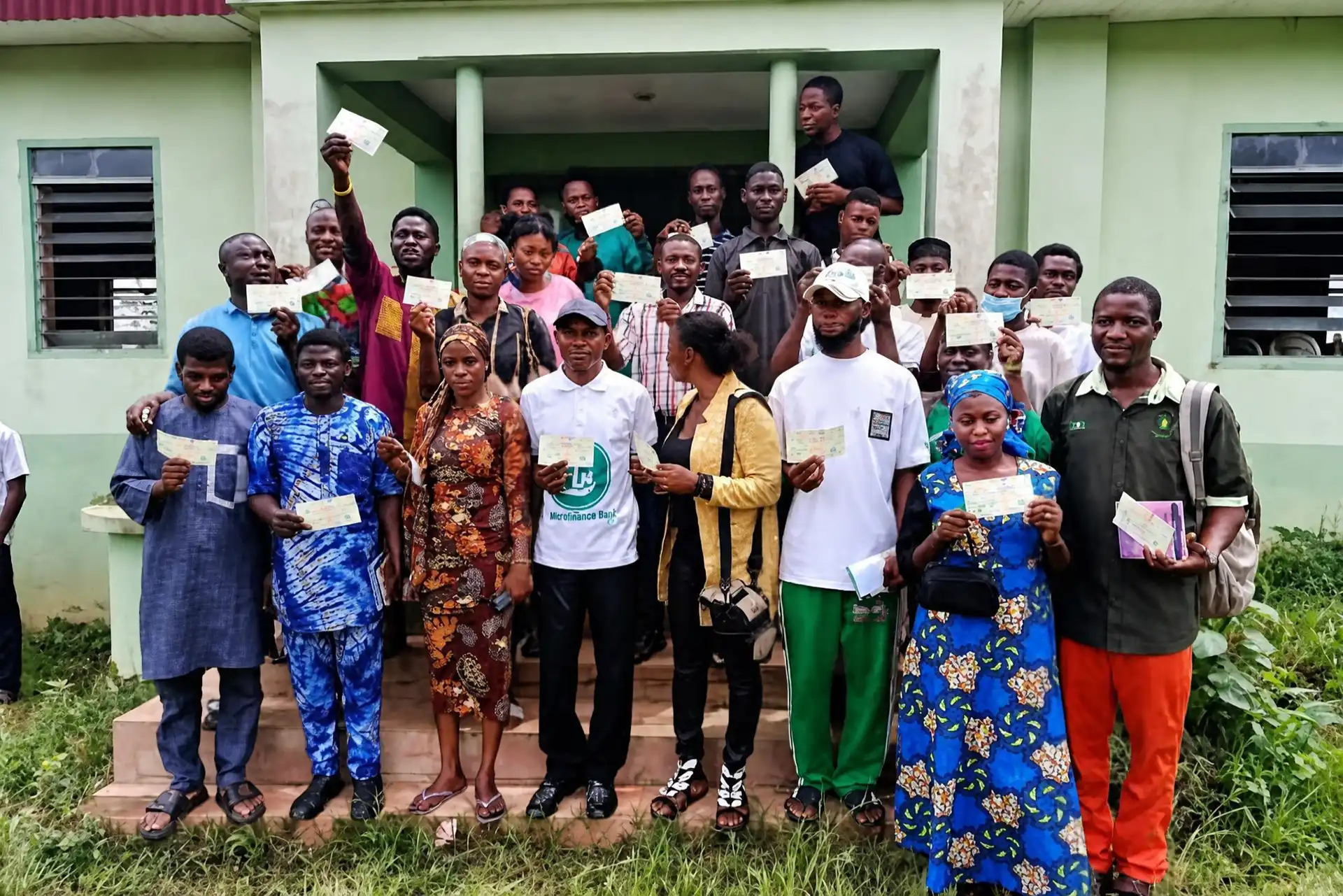
During the February 2026 capacity-building engagements, Fasuyi also disclosed a ₦100 million revolving loan scheme for cooperative societies, facilitated through the Osun State Ministry of Cooperative and Empowerment.
The published account identified ₦68 million from ICDA and ₦32 million from the Owa Obokun as the funding components. Ijesaland was identified as the first beneficiary of the scheme in Osun State.
Although the cooperative loan scheme is distinct from the IDF’s core development-funding structure, its disclosure during the engagements highlighted the relationship between community development and economic empowerment.
Access to finance can help cooperative societies and their members pursue productive activities, expand small enterprises and strengthen local livelihoods.
A revolving loan arrangement also depends on responsible borrowing, repayment and sound administration so that funds can continue to support beneficiaries over time.
Together, these initiatives reflect a broader approach to development that recognises the importance of community infrastructure, effective local planning and economic opportunity.
Their results should be assessed separately, with clear reporting on the IDF’s project funding and the loan scheme’s beneficiaries, disbursements and repayments.
Strengthening the Fund’s institutional capacity
A community development fund needs more than an inspiring vision and initial financial commitments. It also requires a management structure capable of coordinating activities, tracking performance and maintaining the confidence of contributors.
By March 2026, ICDA had strengthened the IDF’s institutional arrangements through the appointment of Alagba Wale Idowu as substantive chairman, expansion of the management team, establishment of an operational office with permanent staff and introduction of an 11-point monthly deliverables framework.
The reporting framework covered financial contributions, membership growth, project execution, budget utilisation and performance across the six local government areas.
Monthly performance updates and regular reporting to the ICDA Board were also prescribed as measures to strengthen transparency and accountability.
These arrangements were intended to make the Fund’s operations more systematic and its performance easier to assess.
A defined reporting structure can help identify implementation delays, track expenditure against approved budgets and provide stakeholders with information about progress.
However, the existence of a reporting framework should be distinguished from evidence of consistent compliance. Regular publication of financial statements, project updates and independently verifiable outcomes would help demonstrate how effectively these arrangements operate in practice.
The principles behind the Ijesaland Development Fund
Five principles help explain the significance of the IDF initiative.
Leadership by example. Fasuyi conceived the funding model, mobilised institutional support and made a personal contribution towards the Fund’s development objectives.
Vision. The IDF was designed as a continuing community development mechanism rather than a one-off fundraising exercise for an isolated project.
Integrity. Its long-term credibility depends on responsible management, clear procedures and contributors’ confidence that resources will serve the collective interest.
Transparency. Defined responsibilities, financial reporting and communication about projects are intended to help stakeholders understand how resources are raised and used.
Accountability. Community needs assessment, project prioritisation, budget utilisation reports and performance monitoring are intended to connect contributions with measurable development outcomes.
These principles are mutually reinforcing. Broad participation helps mobilise resources; sound planning helps determine where those resources are needed; and transparent management helps maintain confidence in the institution.
The Fund’s enduring success will depend on how consistently these principles are reflected in its operations.
Why community ownership matters
Community ownership is central to the IDF’s philosophy.
When residents participate in identifying development priorities, they have an opportunity to express their needs and understand the considerations behind project selection. When contributors receive clear information about finances and implementation, they can better assess whether the Fund is delivering on its mandate.
This creates the possibility of a stronger relationship between contribution, decision-making and results.
For Ijesaland, the ward-based approach also offers a means of ensuring that development discussions consider communities across the six local government areas rather than concentrating solely on prominent towns or highly visible projects.
The inclusion of Ijesa people in the diaspora further broadens the potential participation base, allowing those who live outside the region to remain involved in its development.
Nevertheless, community ownership must be sustained through practice. It requires accessible participation, fair consideration of competing needs, responsible financial management and credible information about results.
The IDF’s original vision provides a framework for pursuing these objectives. Its lasting significance will depend on the extent to which the framework continues to serve the communities for which it was established.
A milestone in a decade of community stewardship
The conception and mobilisation of the Ijesaland Development Fund form an important part of the record of Asiwaju Olayinka Fasuyi’s community stewardship.
The initiative began with a development challenge: how could Ijesaland move beyond dependence on a limited number of contributors and establish a more inclusive and sustainable approach to financing grassroots development?
Fasuyi’s response was to conceive a community-owned fund, mobilise support through ICDA, secure traditional endorsement, establish a financial foundation and promote the capacity-building required to help communities identify their own priorities.
The subsequent development of management and reporting structures represented further steps towards creating an institution capable of supporting that vision.
The story is also one of collective contribution. The Fund’s reported initial receipts, the participation of recognised ambassadors, the involvement of traditional rulers and the engagement of ward-level stakeholders all demonstrate the importance of bringing people together around a common objective.
Fasuyi’s contribution lies in originating and advancing the model, while its success requires the continuing commitment of ICDA, contributors, community leaders, management personnel and the wider Ijesa population.
Beyond fundraising: Building a lasting development institution
The Ijesaland Development Fund is significant because it seeks to connect three essential elements of community development: collective financing, grassroots decision-making and accountable implementation.
Its vision is to enable Ijesa people to contribute according to their means, empower communities to identify their priorities and create a structured mechanism for financing development across the region.
The reported ₦115.99 million received at the initial launch marked an important starting point. The February 2026 capacity-building programme and subsequent institutional arrangements were intended to provide the planning and management capabilities required to take the Fund forward.
The next measure of progress is the delivery of projects that communities can identify, evaluate and experience in their daily lives.
That will require continued resource mobilisation, credible project appraisal, transparent expenditure reporting and regular communication about achievements and challenges.
For Ijesaland, the wider lesson is that sustainable development is strongest when it is not left to government alone or entrusted to a handful of donors. It becomes a shared undertaking when communities have a practical way to contribute, participate in decisions and hold development institutions accountable.
Through the conception and mobilisation of the Ijesaland Development Fund, Asiwaju Olayinka Fasuyi helped advance a model built around that principle: the sustainable development of Ijesaland is a responsibility shared by all Ijesa people.