
16 — Reviving Indigenous Enterprise: How Asiwaju Olayinka Fasuyi Conceived the Ijesaland Cooperative Society
A ₦128 million cooperative financing initiative designed to strengthen indigenous businesses, improve access to capital and expand grassroots economic opportunities across Ijesaland’s 64 wards.
A thriving local economy depends on the ability of its people to establish businesses, sustain productive enterprises, create jobs and participate meaningfully in commercial activities within their communities.
Yet, for many indigenous entrepreneurs, traders, artisans and farmers, access to affordable financing remains a significant obstacle. Without sufficient capital, viable businesses may struggle to expand, artisans may be unable to acquire equipment, and aspiring entrepreneurs may find it difficult to turn their skills into sustainable livelihoods.
Recognising these challenges, Asiwaju Olayinka Fasuyi, the Asiwaju of Ijesaland, conceived the establishment of the Ijesaland Cooperative Society (ICS) as a structured response to the economic challenges confronting indigenous business operators.
Through the Ijesa Community Development Assembly (ICDA), he mobilised institutional partnerships and resources to advance a cooperative financing model intended to serve all 64 wards of Ijesaland.
The initiative subsequently attracted a reported combined funding commitment of ₦128 million, comprising ₦64 million mobilised by ICDA and a matching ₦64 million announced by the Osun State Government.
The significance of the initiative lies not simply in the amount of money mobilised, but in the effort to establish an organised financing mechanism through which local entrepreneurs can access revolving loans, strengthen their businesses and contribute to the economic development of their communities.
Identifying a longstanding economic challenge
Across Ijesaland, indigenous business operators have faced challenges in sustaining their participation in commercial activities within their homeland. Limited access to capital has also constrained the ability of many entrepreneurs to expand existing businesses, acquire productive equipment or establish new enterprises.
For traders, inadequate working capital can restrict inventory and sales. For artisans, a lack of equipment may limit productivity. Farmers may struggle to finance inputs and improve production, while small-business owners can find it difficult to respond to new market opportunities.
These challenges are not unique to Ijesaland, but their effects can be particularly significant in communities seeking to strengthen locally owned businesses and create more employment opportunities.
The issue therefore required more than occasional financial assistance. It called for an organised approach that could bring business operators together, improve access to financing and encourage responsible use of available resources.
It was in response to this challenge that Fasuyi conceived the Ijesaland Cooperative Society.
Rather than approach the issue solely as a fundraising exercise, the concept focused on building a cooperative institution through which indigenous entrepreneurs could access financing within a defined framework.
The broader ambition was to strengthen enterprise development, promote financial inclusion, encourage wealth creation and support employment generation across Ijesaland.
From an idea to an institutional partnership
Having conceived the initiative, Fasuyi, in his capacity as Chairman of ICDA, moved to mobilise the institutional support required to translate the proposal into a practical programme.
Strategic engagements between ICDA and the Osun State Ministry of Cooperatives and Empowerment helped advance the initiative. The involvement of the Ministry provided an avenue for collaboration with the state government on the proposed cooperative financing model.
Traditional support was also important. The initiative received the endorsement of the Paramount Ruler of Ijesaland, His Imperial Majesty Owa Clement Adesuyi Haastrup, Ajimoko III.
The cooperative was designed to serve entrepreneurs, traders, artisans, farmers and other vocational practitioners across the six local government areas of Ijesaland: Ilesa East, Ilesa West, Obokun, Oriade, Atakumosa East and Atakumosa West.
Its proposed reach across 64 wards was intended to bring economic opportunities closer to communities and give eligible residents a structured route towards participating in the scheme.
The approach reflected a practical understanding of community development: identifying an economic problem is only the beginning. A workable response also requires institutional cooperation, financial resources, clear eligibility conditions and a mechanism for implementation.
Mobilising ₦128 million for enterprise development
One of the major milestones in the development of the Ijesaland Cooperative Society was the mobilisation of seed funding.
Under Fasuyi’s leadership, ICDA mobilised ₦64 million for the initiative. The Osun State Government subsequently announced a matching contribution of another ₦64 million, bringing the reported combined funding arrangement to ₦128 million.
The arrangement demonstrated how community mobilisation could attract additional institutional support when a proposal was supported by a defined objective and an organised implementation framework.
ICDA’s contribution reflected the willingness of community stakeholders to commit resources towards strengthening indigenous enterprise. The state government’s matching contribution expanded the financing base and provided an opportunity to increase the scheme’s potential reach.
Fasuyi also acknowledged the contributions of ICDA members and the support of the traditional institution, the state government and the Ministry of Cooperatives and Empowerment.
The funding was intended to support productive economic activities through revolving loans rather than one-off grants. Under this model, beneficiaries are expected to use the money for approved business purposes and repay it according to agreed terms.
Repayments can then help replenish the available pool of funds, allowing the scheme to support additional businesses over time.
This revolving structure is central to the initiative’s long-term ambition. Its success depends not only on the amount initially mobilised, but also on responsible lending, appropriate business use, repayment discipline and effective financial oversight.
Preparing all 64 wards for participation
A financing scheme designed to serve communities across 64 wards requires a clear process for identifying eligible participants and ensuring that local cooperative societies are properly organised.
Following the resource mobilisation phase, ICDA embarked on sensitisation campaigns across Ijesaland’s 64 wards. The engagement encouraged communities to establish cooperative societies and complete the registration requirements necessary for participation.
The registration process was intended to identify eligible groups and establish an organisational basis for administering the revolving loan facility.
By the time of the formal launch, 29 wards had completed the required registration process and qualified for the first phase of the programme.
The remaining wards were expected to become eligible after completing the necessary registration formalities.
This phased approach allowed implementation to begin with cooperative societies that had met the stipulated requirements while providing other wards with a pathway towards participation.
The programme also established conditions intended to protect the purpose of the intervention. Beneficiaries were required to be of Ijesa origin, use the revolving loans exclusively for productive ventures and comply with periodic monitoring and evaluation.
These conditions were designed to connect the funds with enterprise development and encourage responsible participation.
They also underscore an important distinction: although the overall funding arrangement was designed to cover all 64 wards, the first phase did not mean that every ward had already received funding.
June 29, 2026: The cooperative society takes off
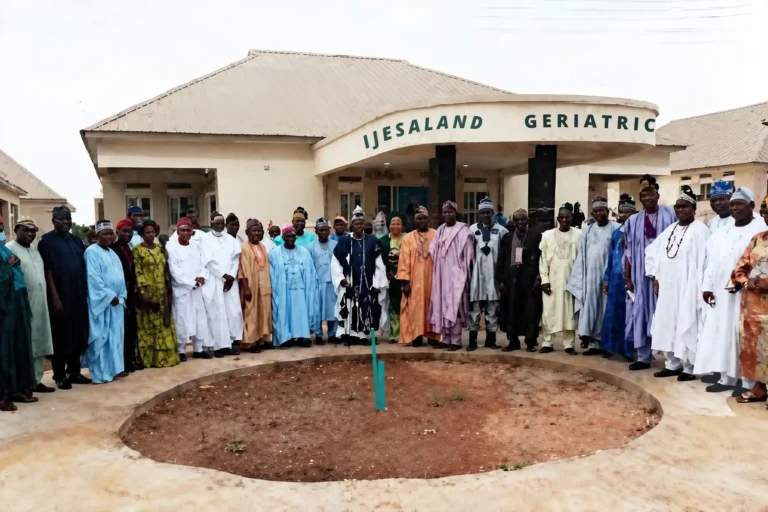
The Ijesaland Cooperative Society was formally launched in Ilesa on June 29, 2026, marking a significant transition from conception and mobilisation to implementation.
The event brought together traditional rulers, government officials, ICDA leaders, cooperative representatives, community stakeholders and other prominent sons and daughters of Ijesaland.
The Deputy Governor of Osun State, Prince Kola Adewusi, represented Governor Ademola Jackson Nurudeen Adeleke as Special Guest of Honour. The Commissioner for Cooperatives and Empowerment, Prince Adebayo Ogungbangbe, also attended alongside officials of the Ministry.
Chief Akin Olatunbosun, Chairman of the Ijesaland Cooperative Society, coordinated the programme, while Fasuyi delivered the keynote address.
During the event, Fasuyi explained the rationale behind the initiative, connecting it to concerns about the declining participation of Ijesa indigenes in commercial activities within their homeland and the need to improve access to finance for local businesses.
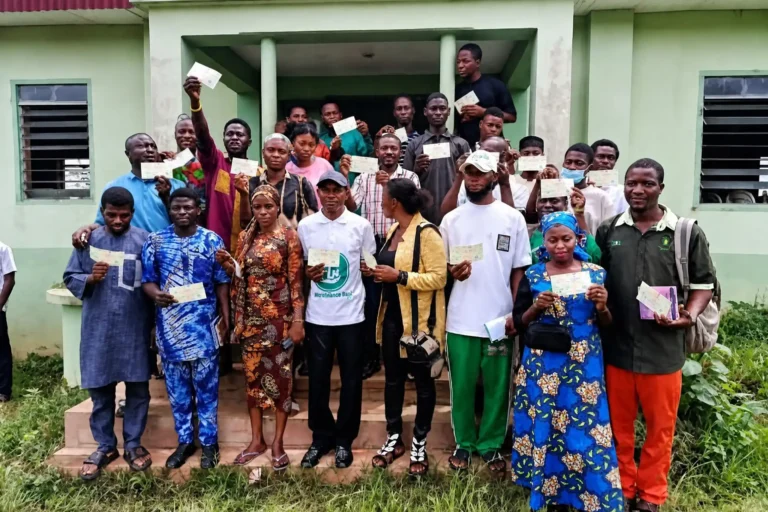
The ceremony also featured the presentation of the cooperative’s Certificate of Registration and the symbolic distribution of ₦1 million seed-fund cheques to each of the 29 qualifying wards.
A total of ₦29 million was reported as disbursed during this first phase.
The launch marked the beginning of the scheme’s operational journey. The funds were intended to support eligible cooperative members in pursuing productive ventures, strengthening their businesses and creating opportunities for further economic activity.
Why the revolving-loan model matters
Access to finance can make a meaningful difference to small businesses, but the structure through which financing is provided is equally important.
A one-off grant may help an entrepreneur meet an immediate need. A properly managed revolving loan scheme, by contrast, can potentially support successive groups of beneficiaries as repayments return to the fund.
For a trader, financing may help increase stock and improve business turnover. For an artisan, it may provide the means to acquire tools or equipment. For a farmer, it may support productive inputs or other approved agricultural activities. For a small-business owner, it may provide working capital to meet customer demand or expand operations.
These examples illustrate the types of productive activities that a cooperative financing model can support; actual beneficiary uses and outcomes should be documented through the programme’s monitoring process.
The ICS model is intended to connect access to capital with business responsibility. Funds are not simply distributed without conditions: beneficiaries are expected to use them for approved productive ventures and repay them under the agreed arrangements.
Repayment is particularly important because it determines whether the fund can continue serving other cooperative members.
A revolving scheme therefore requires sound assessment of applicants, realistic repayment schedules, clear loan documentation, proper financial records and effective follow-up.
When these safeguards are applied consistently, the model has the potential to extend the benefits of the original funding beyond the first group of recipients.
Bringing economic opportunities closer to communities
The 64-ward structure is one of the defining features of the Ijesaland Cooperative Society.
Rather than concentrate the initiative solely in the major commercial centres, the framework seeks to create opportunities for organised participation across Ijesaland’s six local government areas.
This matters because entrepreneurs in different communities may face different economic challenges. A trader’s financing needs may differ from those of a farmer, an artisan or a service provider.
A ward-based cooperative structure can provide a platform through which these differences are recognised and eligible members can be organised for participation.
The model also creates an opportunity to encourage cooperation among business operators who may otherwise work individually, with limited access to collective support.
Over time, stronger cooperative organisation could help participants share experiences, improve business practices and develop a greater understanding of financial management.
These potential benefits will depend on the quality of cooperative leadership, the participation of members and the effectiveness of the structures established to manage the scheme.
The wider ambition remains to strengthen indigenous enterprise and encourage more Ijesa people to participate productively in the economic life of their homeland.
Leadership, partnership and shared responsibility
The establishment of the Ijesaland Cooperative Society reflects a sequence of development actions: identifying an economic challenge, conceiving a practical response, mobilising institutional partners, securing resources, preparing beneficiaries and beginning implementation.
Fasuyi’s role was central to the initiative’s conception and mobilisation. Through ICDA, he helped advance the proposal and organise the support required to establish the cooperative financing model.
However, the initiative is also a collective achievement involving ICDA members, the Osun State Government, the Ministry of Cooperatives and Empowerment, the traditional institution, cooperative representatives and community stakeholders.
The reported ₦128 million funding arrangement would not have emerged from the initiative’s conception alone. It required financial commitments, institutional engagement and a framework through which the funds could be directed towards the intended beneficiaries.
Recognising these contributions is important to understanding how community development initiatives move from an idea to a programme capable of reaching people.
It also reinforces the principle that sustainable economic development is strengthened when community leadership and public institutions work together around clearly defined objectives.
The five principles behind the initiative
The conception and implementation of the Ijesaland Cooperative Society illustrate five principles associated with Fasuyi’s decade of community stewardship.
Leadership by example: Fasuyi championed a practical institutional response to an economic challenge and helped mobilise the resources required to advance it.
Vision: The cooperative was conceived as a continuing financing mechanism intended to serve indigenous business operators across 64 wards, rather than as a one-time financial intervention.
Integrity: The revolving-loan model depends on responsible management, the proper use of funds and beneficiaries’ commitment to repay their loans according to agreed terms.
Transparency: Community sensitisation, registration requirements and stakeholder engagement provide a structured basis for participation. Continued financial reporting and disclosure are essential to maintaining contributors’ confidence.
Accountability: Eligibility conditions, monitoring and evaluation are intended to connect the resources provided with productive activities and measurable business outcomes.
These principles are particularly relevant to a cooperative scheme because its future depends on the confidence of members, the responsible administration of resources and the continued availability of funds for successive beneficiaries.
Beyond the launch: Measuring lasting economic impact
The formal launch and initial disbursement represent important milestones, but the long-term success of the Ijesaland Cooperative Society will be measured by what the financing enables its members to achieve.
Key indicators will include the number of active cooperative societies, the volume of loans disbursed and repaid, the businesses supported, the survival and growth of beneficiary enterprises, and the employment opportunities created.
Transparent reporting on these outcomes will help contributors and participating communities understand how the programme is performing.
It will also help identify challenges early, improve the administration of the scheme and determine whether the revolving financing model is reaching the people and businesses it was designed to support.
The initial phase provided ₦1 million in seed funding to each of 29 qualifying wards, while the remaining wards were expected to qualify after completing registration. Subsequent reporting should make clear when additional wards become eligible, when funds are disbursed and how the overall financing arrangement is being utilised.
Such information will be essential to assessing whether the initiative is achieving its ambition of expanding economic opportunities throughout Ijesaland.
A milestone in strengthening Ijesaland’s indigenous economy
The Ijesaland Cooperative Society occupies an important place in the record of Asiwaju Olayinka Fasuyi’s decade of community stewardship because it addresses an economic challenge through an organised, community-oriented institution.
Its conception was driven by the need to strengthen indigenous businesses and improve access to capital. Its development involved collaboration with ICDA, the traditional institution and the Osun State Government. Its launch in June 2026 marked the beginning of implementation, with ₦29 million reported as disbursed to 29 qualifying wards during the first phase.
The wider funding arrangement of ₦128 million provides a foundation for the cooperative’s intended role in supporting productive ventures and encouraging enterprise development.
Fasuyi’s contribution lies in conceiving the model and helping mobilise the institutional and financial support required to bring it forward. The ongoing work of ICDA, the cooperative’s management, public-sector partners and participating communities will determine how effectively the initiative delivers its intended benefits.
Ultimately, the objective is not simply to distribute loans. It is to help create an environment in which indigenous entrepreneurs can access finance, strengthen their businesses, generate livelihoods and contribute to the prosperity of their communities.
The Ijesaland Cooperative Society represents an effort to make that ambition practical: turning a longstanding economic challenge into a structured opportunity for enterprise development, with the wider goal of building a stronger and more inclusive indigenous economy across Ijesaland.